a guide from the cohort · updated 5 Oct 2026
Is an executive DBA worth it?
the short answer
For the right person, yes, and the payoff is more than the letters after your name. Students in Temple’s Executive DBA cohort point to four returns: a rigorous way to attack problems from work, credibility that clients and employers notice, a cohort that turns into a support network, and research skills that outlast the program. The costs are real too: a heavy workload on top of a full-time job, time away from family, and courses that humble people who thought they were done with exams.
What graduates say changed
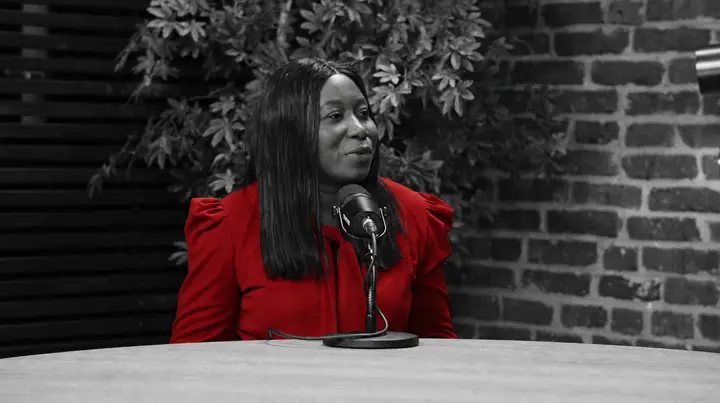
Early in the program, Temple’s DBA students meet alumni who tell them what to expect. One alumnus said something Cindy Okosun wrote in her journal and never forgot.
“My price went up.”
A Temple DBA alumnus, as remembered by Cindy Okosun · After Dark 04, 11:17
Another DBA graduate Cindy met, from a program in Canada, described the consulting work that followed the degree as a rewarding change (After Dark 04, 9:57). The honest caveat is that there is little research on what happens to DBA graduates afterwards. Cindy’s study group is researching exactly that question (After Dark 04, 9:05).
The reasons that hold up
- Closing the gap between practice and theory. Cindy kept seeing practitioners jump straight to root-cause analysis without defining the problem, finding the theory behind it, or testing it with real data (After Dark 04, 0:56).
- A more scientific way to look at work. Fox’s associate dean for doctoral programs says the most common motivation he sees is wanting to look at the problems you face at work in a different way (Episode 01, 14:18).
- The cohort. Cindy’s biggest surprise wasn’t the coursework but the people: group members checking in between residencies and pushing each other through the weeks when quitting felt tempting (After Dark 04, 6:22).
- A question someone asked you. James Jeansonne admits his first reason is not the best one: because it’s there. At his Temple master’s graduation a professor asked who was going to keep going, and five years later he put his hand up (After Dark 04, 2:58).
What it costs
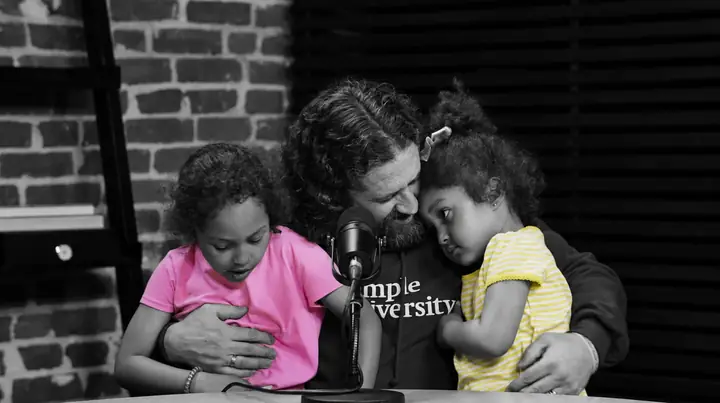
Nathan Luce, a consultant, found the program harder than his MBA at Johns Hopkins. One week brought two discussion boards, a quiz, a group business case, a white paper and a “hit the field” assignment, and the white paper went in late after a night that ran until 5 a.m. (After Dark 03, 6:52). His daughters, six and four, don’t understand what homework is for a dad.
“Daddy, no, I don’t want you to go to school.”
Nathan Luce’s daughters, as he tells it · After Dark 03, 8:47
Statistics is the class that surprises people: clear in the room, humbling at home (After Dark 04, 23:11). And the reading is real. One After Dark guest counted roughly 700 pages of articles in a single stretch (After Dark 01, 24:22).
Questions to ask yourself before you apply
- Is there a problem from your own work you would happily study for years? Choosing a dissertation you love versus one you can finish is a dilemma every cohort talks about (After Dark 03, 5:10).
- Can your calendar absorb residency weekends plus weekly deadlines, alongside a full-time job?
- Who at home and at work is in on it with you?
- What do you want the degree to change: your price, your role, or the way you think?
- Have you talked to alumni? Both Cindy and James did before or at the start, and both still quote them (After Dark 04, 10:25).
Weighing it against a PhD instead? Read DBA vs PhD: what’s actually different? For how the Temple program runs week to week, see Inside Temple’s Executive DBA.