a guide from the cohort · updated 5 Oct 2026
DBA vs PhD: what’s actually different?
the short answer
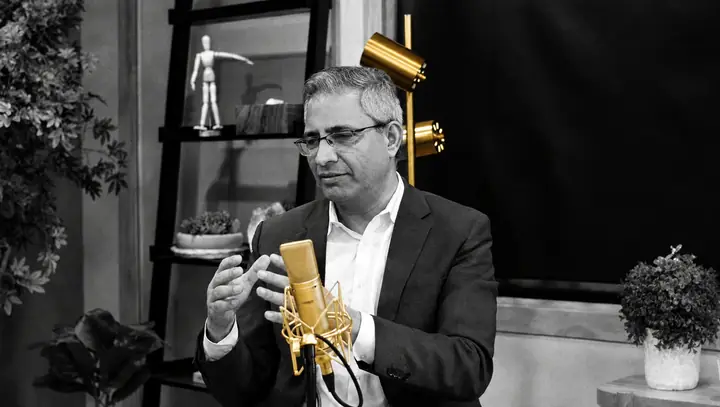
Both are research doctorates, and at Temple’s Fox School they are held to the same theoretical rigor. The difference is purpose. A PhD prepares you for an academic career built on publishing. A DBA brings experienced professionals and the problems they face at work into the research process, then carries the results back into practice. Dr. Sunil Wattal, who oversees the Executive DBA at Fox, put it plainly on our first episode: the program is not a PhD light.
Same rigor, different motivation
Asked on the show whether DBAs get treated as a lighter PhD, Wattal said the theoretical background and the rigor are the same, and the program follows all the same steps (Episode 01, 13:10). Where the two diverge is what you do with the degree. PhD programs run longer because most students want academic careers, which means publishing in journals and waiting three to five years for papers to land (Episode 01, 13:28).
DBA students arrive with different goals. The most common one Wattal sees is a desire to look at the problems you face at work in a different way, and to be more scientific about solving them (Episode 01, 14:18). They also arrive with 10 to 15 years of experience behind them.
“The way it’s intended is not a PhD light.”
Dr. Sunil Wattal, Associate Dean of Research and Doctoral Programs, Fox School of Business · Episode 01, 12:47
The two bookends
Wattal describes research as four steps: identifying the problem, the theory, the data and analysis, and finally the application (Episode 01, 48:32). Business schools, he says, are good at the middle two. What the DBA brings is the two bookends: practitioners who know which problems matter, and who are positioned to put the answers to work. That is why he sees the degree as complementary to business-school research rather than a cheaper copy of it (Episode 01, 49:12).
Why the DBA exists at all
Wattal opened the episode with a line from the Nobel laureate Herbert Simon: industry and academia are like oil and water. Shake them and they mix; leave them alone and they separate (Episode 01, 3:32). Research produced in business schools rarely reaches the people making decisions, partly because journals cost money and are hard to reach outside academia. Asked how many academic journal articles they had read before joining the program, our hosts answered honestly: zero, maybe one or two (Episode 01, 4:49). The DBA is the bridge: people directly connected to real problems, doing research that is relevant as well as rigorous.
Applied research isn’t the same thing
Consulting firms publish plenty of applied research, so why a doctorate? Academic research identifies a problem, looks for deeper theory that can explain it, proposes hypotheses, then tests them with data (Episode 01, 6:11). Industry research often skips steps: survey a group, summarize the findings, move on. That describes a moment well but rarely generalizes beyond it (Episode 01, 6:26). A DBA trains you to run the full process on problems from your own work.
How students actually choose
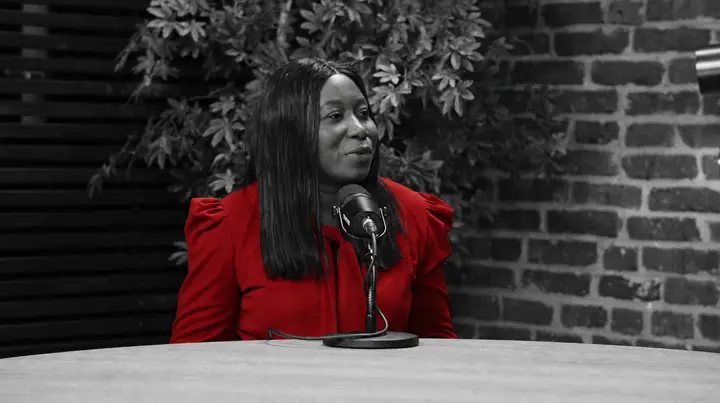
Cindy Okosun weighed both. She had more friends in PhD programs than DBA programs, sat down and compared the two, and decided the DBA fit someone who consults and wants to close the gap between practice and theory (After Dark 04, 2:28). On the first Cohort After Dark, the reason given was simpler: the DBA is practical, and it builds on the career you already have (After Dark 01, 19:17).
At Temple, the two programs share a room
The Fox School is deliberately mixing them. PhD students now present at DBA residencies, sit in for the whole session to hear DBA students’ work, and the school tries to match people researching similar topics (Episode 01, 50:05).
Side by side
| PhD | DBA | |
|---|---|---|
| Built for | People heading into academic careers | Working professionals, typically 10 to 15 years in |
| Theoretical rigor | Full | The same, according to Fox’s associate dean for doctoral programs |
| Where the question starts | Theory and the academic literature | A problem from your own work |
| What success looks like | Published papers and a faculty position | Research that changes how a business decides |
| Pace | Longer, usually full-time | Built around a working schedule |
Still deciding whether the degree pays off? Read Is an executive DBA worth it?