cohort after dark 02 · 27 Jul 2026 · 45 min
Stuck in Dubai when the war broke out: Ashwini Bhaskar and Kevin Burgess
About this episode
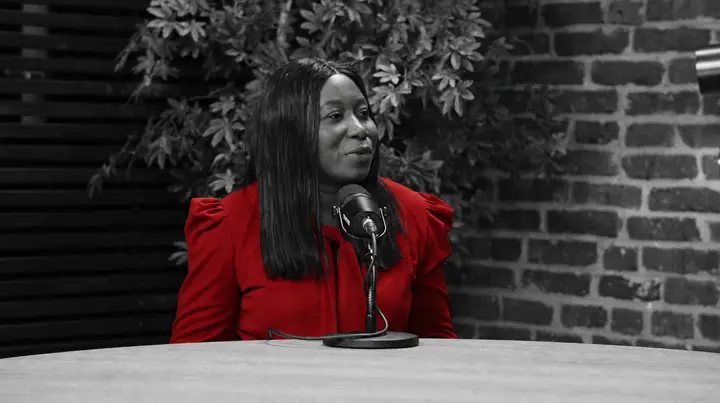
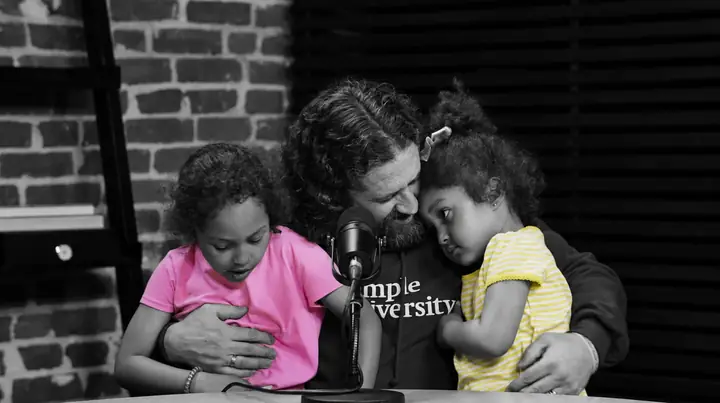
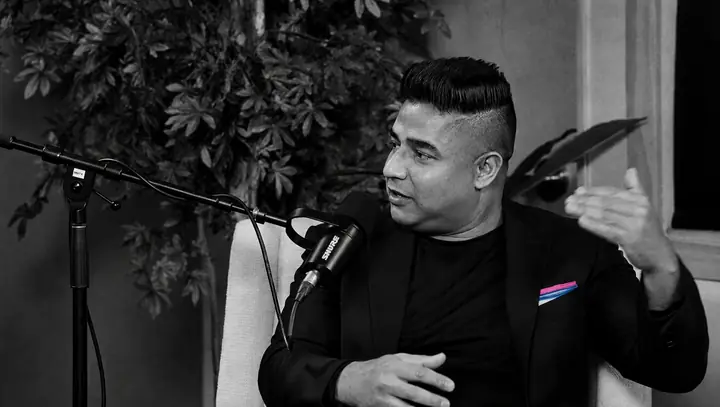
For once the hosts take the guest chairs. Ashwini Bhaskar and Kevin Burgess talk about the roads that led them to a doctorate: a long project with the US Navy, selling a business before an MBA, and what finally pulled each of them into Temple’s Executive DBA.
Then the story. A group of DBA students was in Dubai when the war with Iran broke out: bombings on the news, a drone over a rooftop bar, convoys of black SUVs, a third-party evacuation company, and the long way home to JFK. Recorded so anyone thinking about a DBA at Temple gets a flavor of what the program, and its people, are really like.
Key moments
- A project with the US Navy
- Selling a business, then an MBA
- Running out of time mid-semester
- On the ground in Dubai as the bombing starts
- A drone over the rooftop bar
- Back at JFK
- Thanking Temple and the evacuation team
Full transcript
auto-generated from the recording and lightly corrected for names · select a time to play from there
All right, cohort after dark. Last time we had a couple of our classmates. This time we are a couple of our classmates. Yes.
I don't know. We're going to see what happens. We prepare for everything except for this episode. And Ashweeni and I haven't even talked about what the
heck we're going to talk about. So, yes, let's roll it.
Here we are. So, what do we want to talk about, Kevin? What are we talking about?
Well, let's talk about how was your flight coming in today?
It was good. It was good.
Yeah. Denver airport is I mean TSA pre-check was like five minutes. The standard was like an hour. I was glad because I was running a little late.
Okay. Got that. Forgot my tooth my toothpaste. Forgot to take it out. Oh, wow.
So now you know if I That's why we're far away.
That's a major images. [laughter] We will be remiss if you don't talk about weather,
right? Weather was crazy for last couple of weeks, I guess.
Yeah, right. I mean, we got what 2 feet of snow in Connecticut. Jeez. Can you believe that? No, I can't.
Amazing. We've gotten like so normally in Colorado we get I don't know a couple feet a couple feet like each season and
I think we've gotten like three inches 4 inches this entire year. You send it all back to us.
Yes. Everyone's wor worried about wildfires, right?
Everyone's worried about wildfires. So So how's how's the the DBA program going, Kevin? I have to ask you checking in.
Oh man. Well, since we got these recent assignments done, I know it's some of them are hard.
They're tough. They're tough. Especially like Lynn's class, you can't use AI. So, you got five article assignments and right not allowed to use it.
But I kind of, you know, I have to be honest, I kind of love that assignment even though it took me an inordinate amount of time, which the article review that we did.
Yeah. I mean, just to find those those articles, but I was kind of fascinated by the the whole ethnography. Okay.
Methodology. Just cuz you haven't thought about that stuff before. Yeah. And I'm like, this could be cool.
Yeah, this could be cool. I mean, go camp out maybe in some place and learn about the culture.
So, what Yeah. So, I think that's one of our assignments coming up, right? I if I'm looking forward like we have to go just observe for an hour and then write about it.
Okay.
We'll find I think we'll find out more in a couple days. But, okay.
I think that's what she has us doing. So she's going to have us doing our own e ethn ethnographic whatever study study. Yeah.
Right.
And then of course being a 25 years in consulting I love the whole case study methodology. I mean that hits home right.
That hits home. Absolutely. I mean I could write case studies on case studies on case studies. Right. Right. I mean every project that you do I did believe
it or not you know I did a year and a half project with Pentagon with US Navy.
Okay. And I'm telling you it could be it could be a wonderful case study.
Yeah, I bet it's already kind of written. What' you what'd you do?
Well, you know this was right after the Katrina had happened.
Okay, so 200 I forget 9.
Yes, somewhere in there.
Yes. And you know Donald Rumsel was the the defense secretary at that time. That's right.
And they didn't do a good job at that time. Who did when Katrina happened the help didn't arrive. Oh okay. Very promptly.
Sure.
So uh Donald Rumsfeld it said said u I think he he put out a mandate saying that how can we improve. Okay.
Right. So I was used to work for Accenture in those days supply chain planning and strategy. Okay.
And uh we were given this project for a year and a half to figure out how to optimize our supply chain so that you
know we can respond to these kind of situations in a much better fashion. Okay. It was wonderful. Now that could be a great case study.
Yeah it would. What what were they doing before? What did you find out?
Well, we found out that I think the lack of coordination between different branches of of Navy was basically the main main culprit.
Okay.
Right. So they have this whole thing called MPT, manpower, personal training and education. Okay.
Right. So they were planning to figure out how do we make information go back and forth and coordination much better.
Okay. And there's probably a lot of red tape they have to go through. And red tape is usually slowness. Lot of red tape.
Yeah. As you can imagine, the hierarchy, you know, is the one that kind of true too. The flow of information. Yeah.
Even though all the information is available, but the flow of information that requires action items, that's the one that kind of gets gets impeded.
Right.
So that was our main I mean we did a lot of other stuff. Yeah.
Right. But our main finding at the end of it was that you know the information is not flowing as easily as it should.
So you were working in the big four you know at Accenture for how long?
I was there for about seven years. Eight years. Seven years. Eight years.
Is that the project you remember the most?
I do remember. That [clears throat] was one of the hardest thing I did.
That's one of the things. How long did that last? About a year and a half. Okay.
And I you know what was the most difficult part of that?
Yeah. I was the program manager and I had about eight or nine US Navy commanders who were project project
managers, okay, doing small projects reporting into me and they didn't like that.
They did not like just because they're used to being reported into them.
Yes. They used to be reported in and remember their commanders. So out at the sea they will be commanding a ship. Right.
Right. But in Pentagon they got so many commanders and captains and you said this is my ship now. I mean the what is it? I am the captain.
I am the Right. Right. Right. [snorts] And and you know those commanders they the Pentagon is as you know is the largest office building in the world.
Yeah.
Right. But the place is so is it bigger than Apple now? It is bigger than Apple.
Okay. Or not now but it's bigger than I mean in terms of I don't know in terms of area but in terms of number of people working there.
Right. So so the reason I bring that up is because these commanders who will who will command an entire ship Yeah. in Pentagon they sit in the corridors.
There's no place. Oh my gosh. Can you imagine? They I'm sure they hated that. I know. They totally hated that.
You ever seen that? Like um I think there's a pizza index. Have you heard of that? Near near the Pentagon. Okay.
So, you know how Google Maps will like show if a if a place is busy, right?
There's like a Domino's or something that's like right next to the Pentagon. Okay.
And people have like connected their APIs to get notifications when it starts getting busy. Okay. Yeah.
And they're like, "Oh, we're going to war." Oh, wow. [laughter] The pizza index is going up.
You know, that reminds me of McDonald index. Do you know what McDonald index is? No.
So McDonald index, which is actually reported by economist. Okay. It's this popular now.
It is this popular and is this respected?
It's like how much does a Big Mac cost in each country? Okay. Sure.
Right. So that is shows you how much the inflation is and and so on and so forth.
Okay. And that's like the standard, isn't it? That's the standard. Okay.
Yeah. Very interesting. So, um, you remember the AMC and GameStop stuff a few years ago?
Oh, yeah. Yeah. Yeah. The Reddit stuff was exploding all over the place.
I lost I've lost a couple grand, but Oh, you did? Oh, you were involved in this sc.
I'm like, oh, AMC all the way. Well, here's the thing. I was up I was up good. Okay.
And you ever hear like I held the bag, man. I was like, nope. This is going to go to go to the moon. I I fell for it.
So anyway, that that um coming back to the the our assignments um I think Lynn's assignment was pretty interesting even though I hated it.
Yeah. Um it took a lot of time. It took a lot of brain power. It took a lot of brain power.
A lot of brain power but you know the other one that I'm really excited about is is uh Ram Budambi's I mean that is that has become a very interesting course I have to say.
Yeah. uh especially even in this this uh podcast we just just taped, we're talking about US and China.
Y and everybody seems to have an opinion about this.
Everyone Yeah. Right. There's no question.
Right. So what's what's your take? Um let's hear your US versus China. Yes.
Um I know you have some contrarian thoughts about this.
I think that we see it as a this or that. Mhm.
But I don't know if it helps the collective. I don't know if this like we
want to win more than China helps the US people more than it helps the US people in power, right?
And so I have a hard time relating to that to that entire this versus that.
Who's going to win AI? And I'm super conflicted because I think AI is amazing. I use it all the time. I think it's going to help small businesses.
that's what I'm going to do my dissertation on is AI and AI awareness within small businesses and I think um I had a friend that I did some work with.
He didn't know what you know he knows AI is like chat GPT right but he doesn't know AI is like my current favorite tool is lovable lovable.dev
and you can just whip up a web I'll call it a web app or or anything in no time and next thing you know he's
built like a a month later he's built this entire platform where he knows when he travels from point A to point B for
his company he's connected it to his data to know who who he needs to go talk to to order and he's created this entire
like sales platform for himself before this he had no idea anything about coding, anything about integrations, APIs, SDKs, like anything technical
all singleanded because of, you know, like we just had um AJ on, right? And he said curiosity because he's curious, correct?
And small business owners are curious, right?
And AI is going to really really help that curiosity. So I love the battle because I think the battle between us and China
helps raise our interest level, helps raise like our knowledge, it helps people, right?
But I hate the battle at the same time because I don't like that wealth is just going to be more concentrated. I don't
like that. And I and I wonder, you know, we are going towards a in my opinion a a universal basic income because if not, we won't have enough jobs.
Sure.
In my opinion. And then if we have a universal basic income, who's controlling that? Because right now we have so much money in politics, is that controlled from the same people
that are controlling, you know, so are they just going to keep us like mediocrely happy all the time, right? Or what are the opportunities? So
I'm I'm torn I'm torn on this battle, right? If you allow me to rephrase this or reframe it. Yeah.
I I I think I think how how they are portraying this is it's a zero sum game. Yes.
Right. And I think what you were saying is that it doesn't have to be a zero sum game. No, I think it's more nuanced than all. It can it can raise all the boats.
One doesn't have to lose in order for somebody else to win.
Yeah. And I think the people that don't play the game are the people who are going to be in trouble. Right.
That's what I think. I think if you ignore what's going on in the world and you just say, I'm going to just stay in my lane. I'm an expert in, you know,
underwater basket weaving, right?
You got to find a way to use AI in it. I really I really believe that. But hey, maybe my maybe my research tells otherwise, right? Let's see what happens.
It's very possible.
But do you remember one of those one of those articles that we it was a wonderful article, the hawkish case on decoupling with China?
What do you think about that?
I mean, should we be thinking about should we as a United States should be thinking about decoupling from China? And what does decoupling mean?
In the sense that we should not be, you know, importing stuff from them. we should not be you know we should become
more self-sufficient uh whereas we have such a huge amount of trade deficit with them right I don't
know I I'm younger so I've lived in in this amazing era of information sharing
where we've shared economic benefits and gains and information my entire life that I've
been here we've been able to travel wherever we wanted to been able to do all that. And so the idea to decouple something that
I've really appreciated kind of like it's kind of it's kind it it makes me itch a little bit like I don't know. I just don't know.
Sure.
So and I think I think we stifle creativity and we stifle innovation and I don't remember what
class it was. We talk about innov um uh European um just governances, right? There's a
lot of rules in in European culture, right? I think it was um organization theory. I think that was Amir's class, I think.
And in that class, we because of that, the argument was they're not innovating in Europe on AI, right? They're regulating it.
Because they're regulating, but there I think there's nuance there, too, because some of the most creative innovative things come out of constraint.
Sure. Sure. Sure. Sure. So, city is the mother of invention.
Yeah. Exactly. Exactly. Yeah. And I'm sure you've seen that for sure.
Right. In your career, right? So, what else what else you do you like about the the stuff that we have done so far?
Um, you know, I like things that it's spurred. I' I've loved the conversations
we've had. Like even just the ability to have this podcast, right?
We don't get this opportunity without our program, right?
So, like I think that's really neat. I think the the people are amazing.
Um I love that we come in person and we just we have like four days to immerse ourselves.
Right. That part I do love. I have to say. I mean you know those um um those Zoom classes that we have Yeah. They're not the same.
They're not the They're not the same.
They're not the same. I think the biggest learning is immersing yourself for 4 days and having such smart conversations with everybody. Right.
Yeah. Uh so the what's interesting I didn't see coming is we'll take our class, right? And then we'll have a break and then like during a break
everyone's kind of thinking about what's been talking about, right?
And every conversation at lunch or the break involves what we're talking about in some kind of way. Very interesting. And you're usually in that conversation.
Super interesting. [laughter] We can't stop ourselves. Absolutely.
What What drove you to this point in your life?
That is such an interesting question. I get asked that all the time.
All right. Well, let's ask a different question then.
No, no, I'm happy to answer actually to be honest with you. I mean after you're young. You're like what? 26 27 what
plus
[laughter]
well 30 plus years I graduated uh undergrad in 1986. Okay. Right. So it's been about 40 plus years. 86. 86. Yeah.
Okay. So I was born in '86.
There you go. God. I graduated high engineering school. Yeah. Oh, engineering school.
Yes. I'm a marine engineer where uh Kolkata. I did all my education back in back in India. So I I did uh my four
years of marine engineering, graduated in 1986, and you wouldn't believe it, uh Kevin, after that I worked on the ships for five years.
Oh, that's why you told those Navy people what to do.
Yes. Can you can you believe it? So anyway, I think my motivation to really do this, you know, after having had two
careers, like one shipping career and 25 26 years of consulting really was to kind of challenge myself with something different.
Yeah.
Right. And I'm really not looking for another job or I'm not trying to get back into anything. I'm just doing this out of intellectual curiosity. Yeah, if you can believe that.
Yeah. Well, you also have a 529 that was, you know, burning a hole in no no one's pocket. So, yes. Yes, that is also true. One of the one of the
the deciding factors was the fact that I did have a little bit money left over in 529 plan and well, I could have taken it out and taken the penalty or whatnot.
Oh, you can't, can't you? you you cannot use it for anything else.
Yeah. What's the penalty? Like 10% 10% 10% and your marginal tax rate. Okay.
Right. So it it does burn a little bit of a hole. So I'm like why not use it for Yeah.
education. So I don't know what I'll do with it. I don't know what I'll do with this degree. But you kind of don't care, do you?
I really don't care to be honest. I'm having so much fun though. I have to tell you.
I loved it. Like one of the highlights I hate. So I've got a little one at home. Okay. That must be really hard.
Oh man. It's He's like 13 months. Wow. He's running all over the house now.
So, you got to tell us about your drivers. Why are you doing this?
You know, he is a driver. So, my wife was pregnant. Mhm.
Um, when I was actually before she was pregnant, I always talked about like furthering education. And it's for no
sometimes I question why, right? because it's really like putting a hundred grand plus debt in my pocket like
it better pay off and it might not. It's kind of a scary thing but I've I had a professor um in my MBA
and he was incredible right and he drove me also if he's watching uh Dr. tutors.
Appreciate it. But he drove he drove me to think differently. He had You got to say hi to him, baby.
Uh what's up, dude? [laughter] Um but he drove me to think differently.
And he had entrepreneurial class, but he also had design thinking classes. Okay. Yeah, I love that design thinking.
Yeah. And up until that point in my life, I've always been my own design thinker. And that's kind of how my brain worked. and seeing a structure or
something to think about around design thinking and and he really focused on empathy which really resonated with me. Yep.
Um and you don't hear that in class like how often do you hear about empathy in class? Not at all.
Right. You you have to learn like empathy is a learned skill like like more people I think are are naturally empathetic but I think it's a learned skill if you don't have it.
You could learn it. Yes.
I think you can learn it. And when you become empathetic with what you're building and what you're doing, you create a better product or a better future or better whatever you want to.
So, um, he was a driver. I saw him, he got he had his DBA and he was an adjunct professor. Okay.
And so, you know, I thought I just I had sold my business when I got my MBA. Um, and then Oh, you were an entrepreneur before, too? I forget. Yes.
Had a Did you have a retail store? I had a disc golf retail store.
Oh, wow. Yeah, I [snorts] uh we are really inspiring the next code. I'm telling you.
Yeah, come anybody who's watching this now, you can see the kind of diversity and kind of exciting people that we get.
It's I sometimes you know like I said this in another show that we did like imposttor syndrome man that drives like I feel that every day like imposttor
syndrome and it and it's it's makes no sense. I like look back at my career and I see it and I go what why the why
am I why do I think that right and I think that's another reason why I want a further education because like just to to prove it
you know to myself so so let me ask you this Kevin is it challenging sometime I feel that
or maybe just the attitude that I bring maybe because I don't care job no job whatever yeah go ahead are you finding this a
little bit challenging to what to fit it in to yeah I You talked about imposter syndrome, so I thought maybe a followup year.
Is what challenging? Like this conversation or No, no, no. The the whole DBA thing is challenging.
I mean, of course, it's challenging, right? Yeah. I'm finding it very hard.
It's supposed to be. [laughter] It's And I don't think it's hard because the work is hard. I think it's hard because the time it requires. True.
It requires because it's What did Lynn tell you during her interview? because she told me 10 to 15 hours Ashwin and you'll be fine.
A week. A week. Yeah. Yeah. Something like that. Something like that.
And I think it's true. But if you get behind 10 to 15 is going to be a lot. Is you you I cannot do it in 10 to 15.
Maybe it's just I'm a little bit blunt now or whatnot. But no, I don't think so. I think it's up.
Are you up late like 2 o'clock in the morning type of thing?
No, no, no. I never do that. I mean, that really messes me up.
Okay. But I have kind of scaled down my um my volunteer work. You know, I do
work um you know, I I run a nonprofit uh that mentors and and coaches uh you know, small businesses. So, I've scaled down that a lot.
Have you?
Uh because it's not 10 to 15 hours. It's taking me and I don't want to scare the new cohort or whatever, but uh at least
it's taking me 30 hours at least minimum. Really?
Yep. And I really have a lot of respect for people like you, Kevin, who are working, got a little kid at home. Yeah.
Right. And doing this. Goodness gracious. Yeah. My wife thinks I'm crazy. There's no question. For sure.
Yeah. I mean, do you think that your your bar for what you turn in is high.
I I I I do think that anything worth doing is worth doing well. Yeah. Right. So, I cannot do it well.
Yeah. And that kind of kind of sort of, you know, kind of drives you. Yeah.
To say maybe I can improve this assignment another 20%, 30%. Yeah. Right.
I see I'm finding myself, especially this semester, going, man, I don't have the time. And so I can feel my shortcuts. I can feel
myself not doing as much as I need to or or so.
I can't continue that when we get to dissertation writing because then I'm then I'm screwed.
Why? But I think I'm kind of getting away with it hopefully.
Right now, I mean, I hung around for a little bit with the second and third year students uh on this immersion.
Oh yeah.
And um and they were saying all the same thing that you know if you think it gets easier, it does not. Yeah. There's no way. There's no way it gets easier.
There's no way. And then like right now, right, we're in year one, right?
Year three, we don't have each other to lean on like in person.
Yeah. Year year three, you're pretty much on your own. So that's going to be a sense of there's going to be a humbleness there.
Yeah.
But I'm I'm enjoying it though in the end at the end of it I think I'm enjoying it. I'm loving it.
Yeah, it is. I mean did you know anything about like academic research? No. At all? I did not. Did you care? Not really. Yeah. Me neither.
Not really. I mean you know coming from consulting the kind of research we used to put out and we did a little bit of research.
Yeah. But it was all with a view to what can we sell and and how can we uh use
the technology to create tools that our clients right and it matters what's next matters right we're trying to solve a problem or
we're trying to make something more efficient or better but academia doesn't care about what's next or what what's being solved they just go oh we found a problem [laughter]
it's like oh no no kidding and I would tell you you know I I think my biggest takeaway really is that they
are really trying to teach us how to do research. Yeah.
Right. So, and it's a mindset. It's like learning a new language all together.
It is how to go about you know proving something or or or doing something just for the sake of furthering the knowledge and not trying to solve any problem.
Man, do you remember the first few days? Right. What did you think the first residency?
Oh my god. I mean, I was I was really I mean, I I didn't didn't get anything. Yeah.
Really? I was I'm like, "Oh my god, this is hard." This [laughter] is this is really hard. Same.
Right. I couldn't understand anything Susan was saying. Yeah.
Right. She's talking about methodologies and and all that stuff. Yeah. It was like all foreign language. Yeah. Really?
The same. I remember that. I remember I called I called my wife and I said like, "I don't know if I want to do this." I did. And she's like, "Don't
stick stick it out." She's like, "You're smart. Like, you're just overwhelmed. I shoot, I don't know." And then I started talking to other people and they're all very, very similar responses. Like, this is new.
This is hard. I mean, we're older. True.
We're older. We have to learn something completely new. Completely new.
And you don't do that a lot when you're older. Like, you know, I'm young, but I mean, not to a lot of people, right? Right.
Maybe this is something for uh the next cohort to kind of understand um that in the beginning it may look a little bit difficult.
Yeah. But it is it does become become interesting and and and wonderful as you go along.
Some of um some of my favorite things are you'll read an article that you don't anticipate it being interesting or relevant and then you can take a little
something from it, right? Like there was one about um so I'm doing research like I said on AI awareness and there was an article that
was talking about integrating new technology in businesses and how do you do that and
organizationally I think this was during our organizational class right and it talked about how topdown mandates
just don't work right like if there's new like when the internet and social media marketing was a thing.
There were companies that would mandate their employees, you got to use it.
And those companies didn't effectively get that message to their teams as much as the companies that said, "Hey,
why don't you research about this a little bit? Try it. And by the way, here's some time that we allow you to have, right, to experiment
to go explore and experiment." And and those companies thrived. Correct.
Which is and I think that about AI a lot, too. Like you're going to have companies that mandate use and they're not but they don't know what they're mandating, right?
And then you're going to have companies like, you know, when Google used to be Google, like they're not they don't do it anymore, but yeah, go play with it. Go play with it.
Go play with it. Right. It's an R&D expense, right?
But I'm sure you've seen that in your consulting world.
I mean, we we used to in consulting we we let people do their favorite project. Yeah.
Right. I mean, you're supposed to spend 40 hours in a year doing something that you really like to do with no billing or nothing. Yeah.
Right. Just go experiment, figure it out. And yeah, allow the success to happen.
I mean, allow some creative juices to flow.
Let people take some liberties and do some crazy stuff. And who knows what'll come out of it. All right, man. We got to get heavy.
Really? We got to get heavy on us. We're gonna get heavy. Okay. So, it's not supposed to be heavy.
Okay. But you went you you went to Dubai and our class our entire class had the
option to do a global immersion correct class study. What what was the setup?
Well, so here's a little bit of a background, right? So about a couple of months back they sent out an email saying that uh one of our professors
Amir Amir Sham he's taking a a cohort of people it doesn't have to be first year second year third year it's open to all
of us uh to Dubai to really understand uh why Dubai is so successful why UAE is
so successful specifically Dubai yeah it's a thriving economy right it's a thriving economy and you know not not many people know this
Kevin that that um Dubai's economy is not dependent on oil. They their economy is only 2% oil.
It's probably 5% housewives. Real Housewives of Dubai.
[laughter]
It's a lot of lot of tourism. It's a lot of shipping. Sure. And it's a lot of banking. Okay.
Right. It is all that stuff that Ram Mudami talks about, you know, intangibles. Right. They're not selling tangible oil.
they're selling they they are uh you know as um the course material called it state orchestrated services.
Okay.
Right. So anyway coming back to our immersion course. So it was supposed to be about 25 students from different years.
Yeah.
And um Amir and one administrator Phyllis uh senior director actually senior director of the program. We were supposed to be in Dubai for about a
week. So we all landed up on on February 28th. Okay. Just one day before the war broke out. Oh wow. Right.
That's not a war. One day the conflict happened. Right. Depends. Right.
So um I mean there were 25 of us supposed to be there. Nine of us made it. 11 of us made it there and then we got stuck. Yeah.
Right. The rest of the the people turned around either either were turned around in the air.
I know. Uh Philillip was stuck in in Cairo. Yeah. There was another EMBA person who was stuck in Austria and so on and so forth. So they actually made
they were getting the news while they in the air. Right.
Correct. They got the news while they were in the air.
Bombings were happening and they were turned back. But we were on the ground now. You were in Dubai. We were in Dubai. In the hotel.
In the hotel.
11 of us. Right. And now we thinking how are we going to get out of here? You were in the hotel. Yes.
I thought you were somewhere else. No, I was we we actually were in the hotel and we took a air Amir had a had at a side
um excursion going going believe it or not to Oman. Okay.
So we went to Oman and we were we could see Iran from there. Yeah.
No kidding. And there were speedboats, you know, doing all that smuggling stuff. Yeah.
Right. Because Iran is under sanctions, so they're not they're not supposed to trade.
Okay. But but I'm guessing under you know whatever garb uh you know there were speedboats taking stuff into to Iran. We saw all that.
And you saw Wow.
We saw all that and this but remember this is all before the war. All before anything happened in Iran. Okay.
Right. We come back from there. We're back in Dubai and we hear about this news that this war has broken up. Broken out. Right. And now for last five days.
So I just landed back in in the United States um on Monday. Yeah, right. We were trying to get out of there. Yeah, I know. That's crazy.
And there were alarms and we were, you know, asked to evacuate. We were going into the every day. This is every day happening, right? There'll be alarms
going on and we'll be running down to the basement and we'll be hearing all kind of noises and and all kind of stuff. Jeez. So, you can imagine.
No, I can't. Right. I can't. It's terrifying.
I I don't think I slept at all from for the for two days that we were in that hotel.
Yeah. And then we started to book our tickets. We said okay fine let's start booking our tickets back. So till that time Emirates will let you book a ticket
at night and at 3 3:00 next day they will cancel the flight.
So we went through this whole process and then um you know we were advised by the university that we are going to be
evacuated now. So the university engaged a third party right to be able to evacuate 11 of us. So this is the plan they came up with. We had two options.
Either we can drive to Oman which is a 5-hour drive or we could drive to Riyad in Saudi Arabia which is 11 hours drive.
It was recommended to us by the evacuation um company I believe that it's better to go to Riyad. Okay.
Because Oman bisha block. So 11 of us in a convoy of three SUVs are now
driving down to Riyad. I'm I'm visualizing you guys in black and white.
Yes. You know, like, [laughter] oh man.
Oh my god. It was It was It was just amazing. Through the deserts of Saudi Arabia. There's nothing there.
Did you feel Did you Man, that's I had a million questions. You That had to feel very unsafe.
We were feeling for 11 hours.
Yes. like you probably felt unsafe in the hotel, but the moment you decided like we're taking these three vans, right, or whatever, they were they vans or
No, they were um those large SUVs, you know, those Taho and Rams and whatnot. All black cars, right?
Um and you know, then we were given this security briefing, you know, air is an ex um army.
Oh, that's why he right. So that's why he's in the know. and and we were given this this instructions that u that all the women have to be fully covered and all that stuff, right?
Remember we going into Riyad. We're going to Saudi Arabia.
Think about that, right? It's a different country altogether. Yeah.
Right. You have to have your your hair covered and no part of your skin can be shown and and so on and so forth. And we had to apply for visas.
Okay. How did you apply? Online. Online. Okay.
So, we applied for visas online. We had to stay at the at the UAE and Saudi Arabia border because we didn't get the the visas immediately.
So, we had to wait one day. Okay.
So, we were in this in this resort. It was a pretty nice resort.
Uh but still, I mean, are we going to get the visa?
Are we not going to get the visas? How long are we going to stay here?
You know, do we have to turn back, you know, if it doesn't work out or what not? Where were you getting your news? Just from friends, family.
Just friends, family, and people just going crazy as you can imagine. Yeah.
Back home because they're looking at all these these uh drone attacks happening. Yeah. Did you see anything? We did see one night.
Holy So there was uh you know we were at the rooftop bar one day. Okay. And there was this drone running around.
We can hear the noise and then the jets come come by apparently chasing that that drone down. We did not know at that point of time that they were chasing down the drone
but you heard like just the engines just right. And the next day we find out that that drone actually hit the US consulate like five miles or so.
Yeah. Five miles from where we were. God.
Right. And that you must have heard it in the news that uh you know Fairmont Hotel uh in in Palm Zumeri got hit. Got hit.
That was like three and a half four miles from us. Jeez. It was crazy.
You probably would have been in that area too.
We were in that area like if you if obviously if right things weren't cancelceled and you had a normal experience, right? It it was madness. So anyway, so we we drove down all the way to Riyad.
Um stayed a night in Riyad. Okay.
Right. It was that was a cultural shock to me. I in what ways?
I mean the way I mean the way the whole country is. Okay.
Right. I mean you know women cannot go out by themselves, right?
They have to be accompanied by relatives, your your brother or your your father. Can you believe that? And
one of the group that we were with, you know, we we went out for dinner.
So, you know, we we called the the Ubers to go back and three of our people, two women and one guy, right?
The Uber driver asked the guy as to are they your wives or they your sisters?
Oh, can you imagine the Yeah. So, the guy said, "Hey, they both are my sisters." Wow.
Otherwise, it is illegal. Gosh, that had to be really tough on totally women in the group. Yeah, this is totally shocking. Wow.
Anyway, then from Riyad, the the story didn't end here. Oh god.
Right. So from Riyad, we took uh we got uh tickets to go uh Turkish Airlines to go to Istanbul and then from we had a connection to come back to JFK.
Okay.
Um nothing was just get out first. Get out first. Just get out first. Yeah.
So we landed up at Istanul. Of course the flight was delayed for whatever reasons. I'm sure all kind of war stuff happening. So we missed a JFK flight and
hence we had to stay one more night in IstAnul. Oh wow.
And every night we are not home everybody's feeling. So you can imagine the the kind of phone calls I'm getting from home. Oh man.
And everybody else right.
I tried not to when I messaged you like twice. I think I said like hey man like you need something. I got you. But other than that you do your thing. I also
remember though I did try to like recruit you to get some people on the podcast.
Like let's do a live podcast from actually it was a great idea. We should have done that but the timing and
all the sirens and all the bombing and all that stuff. That's real journalism right there. There it was real journalism. Yeah.
Anyway, so we all finally made it back to JFK. Um but you know there is one thing I I must share with you which
really warmed my heart which is you know before we were leaving Dubai uh we were made to sign up with the US consulate to say we need help.
Yeah. To be evacuated right.
Oh it's part of like a visa process I'm assuming.
No it was just part of uh the consulate services. Oh so after the bombing started. After the bombing started. Okay. Right.
So we all signed up. We all signed up and when we were driving from Dubai to to real believe it or not the counselor
people called all of us one by one I got the first call right and they were like okay we've got a ticket for you to fly down to Athens if
you're available okay and we said no I mean we are already on but still yeah that was great wow
within within couple of days the US government kind of mobilized all those resources and they were ready to help that's good that was really Yeah.
Great.
How did other people in the in the cohort take it?
Oh my god. I'm telling you it was I think everybody took it a little bit differently, I would say. Right.
Makes sense, right? I mean, people are worried.
People were, you know, concerned. They didn't know whether you're going to make it out back at all or not, how long it is going to take. Is it even safe to be flying in a plane?
Well, that see that's what I was thinking from from here was you know number one do you put your transportation back home in the hands of
temple right so that probably was going through everyone's mind too right like we were specifically asked to because I started making you know reservation by
myself and we I was told that no please don't do that uh because I was considering considering
uh you know ideas to go go to India or you know try going back from Singapore and Japan or whatnot Well, see they can't I mean Temple can't tell like I
guess strongly advise right is yeah we would strongly advise that please don't try and do things by yourself because if things start going wrong then they will not be able
they don't have the resources okay right so let's say if I book my ticket uh you know driving down to Oman and then going to let's say Singapore and
those flights get cancelled and I'm now stuck in Oman. Yeah that's true. Temple University cannot help me then.
So this way you kept your your options open a little bit more too. Correct. Yeah.
Right. I think they were advising us and and Felis had the had the toughest job I have to tell you because she was coordinating at 2:00 2 a.m. because of the time difference.
Yeah.
You know, all that stuff that was happening here in in uh on campus, she was being advised as to what to do, how to do it, making all the bookings and everything else.
And then 8 8:00 in the morning local time, we will start harassing her as to what's happening. It's a lot of pressure too, right? Because if she missteps in
any kind of way or something like that's going to be national news and it's going to be everywhere and Temple doesn't want to have a hiccup and that gosh she
she's like the nicest person in the world too. I know she's the best.
I cannot say enough good things about Felis and Amir. Yeah.
Amir just because of his, you know, experience in having seen something like this. I mean for me it was the first time. He's Israeli. He is an Israeli citizen.
Yeah. And Israeli and US dual citizen. Okay.
And uh he's seen this things before, right? I mean it it is something he says it's kind of normal for him.
And for us Yeah.
For us, none of us have ever seen anything like this.
Yeah. Alarms and going in a bunker is not normal for for us. Yeah.
Right. And you know, we all thinking that we're traveling in these three large SUVs. You know, 11 Americans, right?
We are sitting ducks. Yeah.
Right. And we we'll be taking a flight, you know, and and and and wherever we whatever we think about, we think, hey, listen, they're all going to go get after Americans.
Yeah. Right. So we mean Yeah. Everybody's feeling that.
I mean, and that's kind of what was going on around you, right? Like that's why Dubai was getting hit because it's a retaliation. It was super scary.
Wow.
Kevin, it was super scary. But I'm so glad. I'm glad to to Amir and Felis and Temple University. Yeah. And our third party evacuation company.
Yeah.
Uh I think it's Helix or whatever the name is.
Uh but primarily I think I'm I'm I'm super grateful to to Amir with all his expertise and everything else that he
was able to tell us, hey listen, one of the things you know he he said to us was um even if if a bomb explodes a mile
away from you, remember all these hotels are glass. Yep.
So, the glass will shatter and you'll still get hurt. That makes sense.
So, you got to be really careful about when the alarm goes, don't take it lightly. Yeah.
Run out and be in the corridor. Run down to the to the to the basement. So, things small things like that I think because he's seen some of those things before.
See, those aren't you say small things, that's not a small thing. Why? That's [laughter] that's a big for him. It's a small thing, you know.
Maybe. Yeah. It's a big thing. It's a big deal. I'm glad, right? So, some of those those, you know, expertise that he came with, I think they were very helpful. Yeah.
And of course then Phyllis in in organizing all that stuff and coordinating that and because of the time difference and everything else, I think she did an excellent job.
Yeah.
So I can't be more grateful to to Amir and fellas. Did the bar stay open? The bar was open. Okay. Thank God.
The bar was open. But I don't know if you know this or not. In Saudi Arabia, no alcohol is allowed. Not not to Americans.
Not nobody. It's illegal to have alcohol. Even if you're a tourist, you cannot bring it in. They check your baggage and they're serious about this.
When our our three SUVs pulled into the Saudi border, Yeah. everybody had to get off. Okay. They open every piece of luggage.
I forgot about that. I remember there was like a a taboo book back in the day of how to make your own liquor. It's like the the blue flame used to be like
a book that Saudis would share like under the under the table. Right. Right. Right. Yeah. So, no alcohol allowed there at all. Yeah. Amazing.
So, you so you sobered up at the end of the trip?
Yes. [laughter] Sober. Hey, but we were in Stumble for a day and then you you went back on the wagon. We made up you made up for all of them.
Well, I'm glad you're back.
Yes. So, so am I. So, hearing all the stories, you know, and we're going to hear so many more.
Yes. You know, I would suggest uh that maybe we get a couple of people together because I don't think I did justice to what was going through our our minds and our hearts.
Yeah. I mean, to be honest with you, you said everyone's was probably different. Everybody was different.
Yeah. Like I I'm sure like I'm sure some people were like legitimately traumatized. Absolutely.
And I know one person who's not even coming to the residency because they don't want to leave home.
Yeah. I can't they don't want to be traveling. Jumping on a plane. Yeah. Hotels might scare him. Right. Right. Yeah.
So I hate that you went through it, but hey, forever. We got a great story.
We got a great story. I know. I got a story to tell. For sure. Yeah. For sure.
There you go. There's our There's our after dark. Man, what' you think? Oh my god, it was great. Yeah. Yep.
What do you want to see from this podcast that we're doing? Not not the After Dark, but the main podcast. What do you What do you vision for us?
Well, I mean, I think I kind of agree with what AJ said in the last taping that we did that I think we doing this for ourselves first and foremost, right?
To be able to record and to be able to kind of capture, you know, our own journey. Yeah.
Right. Obviously if this journey recounting of this journey can help other people that'll be great as well. Yeah.
Right. So I think those are the two things that I would say. One we telling the story to ourselves so we can at least you know
um be be heard if you will even if it to our our own selves kind of peak that curiosity even more. Absolutely.
Yeah I feel that. And then hopefully if this this a little bit of this podcast and taping can help other people who are considering doing a DBA at Temple, they'll get a flavor of what it is like.
Yeah, I think they will. I think they will, right?
And I hope they do. And the other thing I want is and I I said this before, but um I want us to step down, right?
You know, in a couple years, right?
Like when we're not coming to residencies, right?
I want someone else to be in these chairs. I want somebody else to drive the ship. I want this to be like a gift to to the next cohort
to the next cohort so that we can continue to bridge right academia.
And that's a great idea Kevin. I love that idea when you proposed this that that you know we should hand over the reigns to the incoming cohort.
We need some sponsors. We need some sponsors. Some money. Yes. Yes.
Right on man. Hey combo and uh we'll shoot. There you go. We're after dark. It's time to get back to our hotel. The safe one. Not not Ashwini's over in Dubai.
Dubai. I know. We'll see you next time. See you next time.