cohort in progress · episode 02 · 2 Feb 2026 · 1 hr 23 min
What is enshittification? Dr. Lynne Andersson weighs in
About this episode
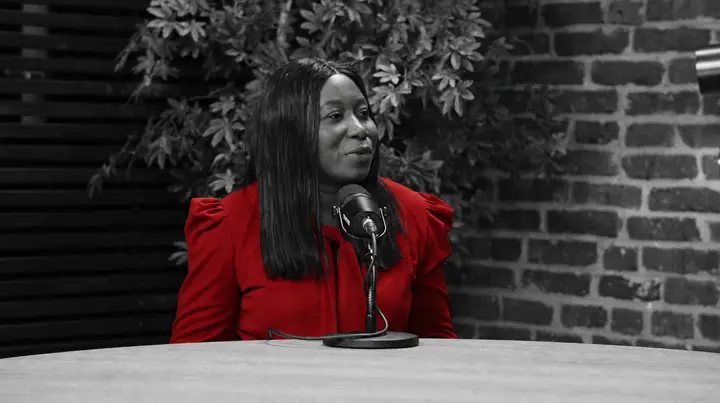
Dr. Lynne Andersson teaches at Temple University, mentors doctoral students doing qualitative research, and sits on the Executive DBA Council. She talks about teaching corporate sustainability, why qualitative research deserves equal footing with quantitative work, and the research on cynicism toward business and incivility in the workplace that started when she was a new doctoral student.
Then the word that named a decade: enshittification, Cory Doctorow’s term for platforms that get worse over time, and Lynne’s two takes on whether AI is speeding it up. Along the way: why AI still writes a poor method section, what a wave of new DBA programs means, and whether incivility is baked into the culture.
Key moments
- Teaching qualitative research methods
- Corporate sustainability at Temple
- Qualitative research earns equal footing
- Cynicism toward business and incivility at work
- Cory Doctorow and enshittification
- Why AI writes a poor method section
- Inside the Executive DBA Council
- Is incivility baked into the culture?
Full transcript
auto-generated from the recording and lightly corrected for names · select a time to play from there
All right, we're here on another episode of Cohort in Progress. If you haven't checked out the last one, go listen to Dr. Sunil Wadd. You'll learn a whole ton
about DBA programs and a little bit about fake news. Pretty cool. I'm Kevin Burgess and this is Ashwini Bascar and
we are super happy to welcome Lynn Anderson today. She is the program director who selected all of us. I guess that's the reason we are all here. She she collected the whole cohort.
Somehow I let you in.
That's right. You let us in. Welcome, Lynn.
Well, thank you. Thanks, guys. So, yeah, as they were saying, I'm the associate academic director of the program. Okay.
Um, for admissions and onboarding the first years, and I also teach the qualitative research methods first year class. Super.
And I mentor tons and tons of students doing qualitative research.
Super. So, you know, I have to ask you, Lynn, um, when you're putting these cohorts together, what kind of people are you looking for? Oh, man.
You skipped the introduction. Oh, you skipped the introduction. Look at this. We got Lynn. She's like executive DBA council, too.
That's an important part of your your world. I am.
You went to a rival of the school. I got my undergrad.
That is true. We are rivals and good old days of ACC rivalries. Now we're rivals are in California. I was about to say play like UCLA.
Exactly. Totally stinks. I hate it. I hate it. Super. Yeah.
So, sorry for Sorry for jumping the gun here, but tell us a little bit about yourself. H I' I've been at Temple 25
year. I'm in my 26th year at Temple, which is absolutely frightening. I don't know how I got so old. Um but I was hired initially at Temple right at the time of the Enron scandal in WorldCom.
Um Temple uh decided like many business schools at the time that we needed to have a required ethics course. Sure.
Right around that time, AACSB, the governing body of business schools, was seeing all these white collar criminals with MBA degrees doing the perp walk.
And so, basically, they're like, "Oh, I guess we need to have ethics." So, they hired me. I was at St. Joseph's University, a Catholic, a Jesuit school that already had ethics before that.
Um, so I I jumped ship, came over to to Temple to kind of run our business society and ethics program. Um, meanwhile, I'm also a qualitative
researcher, but I've spent most of my career at Temple kind of leading all the business, society, and ethics stuff, running our corporate social
responsibility minor, teaching corporate sustainability, and helping um coordinate with other departments and colleges around the university, our
sustainability certificate, and I'm also the the faculty mentor for our net impact chapter. Net Impact is a
international organization for corporate social responsibility professionals and we have a student chapter there. You got a lot of stuff on your plate.
Yeah, I kind of do. I kind of do the dark side of business. I mean that's basically my whole thing is to kind of look critically at business in the business school.
That's a lot of research. It seems right. It is. It is. It is. Yeah. Yeah.
So, you know, I mean, as I said, I have to ask you that uh you know, coming from a ethics ethics background, right? you
know, teaching in a business school, does it does it does it strike strike you as ironic?
Oh, absolutely. In fact, you know, for so long before business ethics became a required course in business school, say in the 90s when I was doing my degree,
um, everybody would always say, "It's an oxymoron. Haha, it's really funny." And um and it was interesting because even in my MBA, I got my MBA at Georgia Tech
University between 1988 and 1990, we had a little um not required elective ethics course at the time and it was taught by a Presbyterian minister.
Oh my god. And I remember just loving that course.
So when I went back to do my PhD, I did it in an organizational behavior department in a business school. But I made sure that I kind of really
emphasized business and society in the courses that I took. I had a very multiddisciplinary PhD because that you could kind of even tell at the time that
there was a growing interest in business schools and business school scholarship in the notion of what does business owe society and what does society do to support and owe business, right?
And and sure enough during the 90s a couple our our governing body which is the Academy of Management which is the
20 plus thousand member um academic kind of home for all management professors, right? You could see divisions were
forming in within that group like there was one for corporate sustainability.
There was a division for social issues and management in addition to business policy and strategy or behavior operations management. You could already
kind of see people were starting to think about you know what is business owe society and the whole notion of corporate social responsibility was really welling up in the 90s.
Right.
Why do you think that that shift started happening right? What I think, you know, a couple things I kind of remember like during the beginning of my PhD in the early 90s,
this is a kind of a cool story. My um my uh faculty mentor I was assigned to was a an OB professor named Tom Baitman. In fact, he's he's one of the people
credited with um the construct of organizational citizenship behavior, kind of dogooders and organizations. Sure.
Tom says, "Lynn, I need you to do something for me. This is your first assignment. um go to the Chapel Hill Art Movie Theater, take these surveys, hand
them out before and after people watch this film. Okay. All right. So, I did it.
The film was Michael Moore's very first documentary, Roger and Me, about the labor issues in Flint, Michigan, in his
hometown with General Motors pulling out of his hometown after literally it had supported that town for 50 60 years, right? And so Tom who was a real kind of
positive psychology guy in the business school even he was kind of seeing the writing on the wall in the by the early 90s that you know the the media suddenly
after I got to even equate it to the wall falling like with the wall falling in 1989 before that you couldn't
critique capitalism right it was it was like sacrilegious to critique capitalism yes suddenly after that you started seeing
like slowly in the media you started seeing critiques of like high CEO pay.
You started seeing critiques of, you know, people being angry that companies were pulling out and outsourcing and getting ever cheaper labor elsewhere.
And Tom kind of caught that buzz. And so, um, he got me really interested right away in the concept of cynicism toward big business. And that's what Tom
was studying when he was handing out when I was handing out surveys before and after the movie Roger and Me. We were looking at people's attitudes toward big business before and after
watching the film. Wasn't that Wasn't that the Gordon Geko era?
Yeah. Yeah. Just after it. Just after it. Just after all that.
I mean, forget about ethics. We were talking about Greed is Good. Yeah. Right. Right. Right.
I haven't heard that name in a long time either. Like Michael Moore, his movies.
And Yeah. I never even He he won an Oscar that year for best documentary. I mean, he a couple times he's won, but that was his first win.
Yeah. And especially like Chapel Hill with that coming out, too. Like that's a I know.
It's probably an interesting place to be.
Really interesting place to be. At the time, um, we we had I think Jesse Helms was still a senator in North Carolina
and he his his comments were, "We just need to put a fence around Chapel Hill and keep the animals in." Oh my god.
So, Lyn, you you were pretty early into this ethics part in Yes. Yep. So, you said 25 plus years now.
Yep. 30 years really. Yeah. So do you think the environment business environment has become more ethical as you're kind of gone 25 30 years through it?
Not at all. In fact, I just was teaching my sustainability class today and we were saying to my students that um
basically you know there was hope maybe between 2000 and 2015 that really we
were moving from shareholder value to stakeholder value. There was all this espoused commitment. In fact, one of my colleagues um in one of the European
business schools did a study of Fortune 500 companies annual annual reports over the last 40 years. And after 2010, the
word stakeholder was the most common word in Fortune 500 annual reports. like there was all this espoused that we're going to look out for all of our
stakeholders culminating in 2019 August when 183 members of the business roundt signed a big statement and put it in the
back of the Wall Street Journal and the New York Times pledging to look out for all of their stakeholders and not just their stockholders. So we were like
woohoo this is going to happen this is great.
What a joke. I mean look where we are today. Do you see that? Some people are in Davos just, you know, going big oil and going, you know, like and, you know,
fire your employees instead put AI in, you know, going with the trends.
Going with the trends. Yeah. ESG's fallen out of favor in just four short years.
Right. But I think the movement did start in the right direction. Maybe it kind of sort of lost steam along the way. Glenn, would you say
it's hard to say like I don't even know where my beliefs have changed so much over the years, you know. Um, people always misconstrue, you know, our
midcentury Nobel laurate Milton Friedman. They always misconstrue him because they think he was just an absolute free market guy. Right. Right.
He wasn't. He um he believed businesses should do whatever they want, but there should be an amazing guard rail around them in terms of government regulation
setting the rules. He just said we shouldn't depend on business to do good.
That you need good government regulation. But what Milton Freriedman never foresaw was the amount of um money
and lobbying that corporations do to change the rules of government and pay off both parties of our you know he could he could have never he died before
Sis United was passed in 2010. Thank God for him.
Yeah. I mean really he didn't want to see that one. Yeah. He he just never predicted that.
You know, he he always like spoke as if government was really going to regulate business and stuff. And you know, we we know that that's not true.
That's not true. I think Citizens United and like all that is super interesting now. And and I don't know a whole lot, but I know that it used to be where
following the money was like, oh no, if they know where the money's coming from, oh no, that's not good. Now it's almost like who cares?
Who cares? And then now it's like, oh yeah, I'm going to buy Greenland because, you know, I'm all these because Estee Lauder Baron wants mineral rights
over there. Like, and there's just no pretense of like, you know, it's good.
So, there's an ethics person like, yeah, you just your hair stands up all the time.
It's funny. I think I I wouldn't even call myself an ethics person. I think I'm a big systems person. And so, to me, this all just sort of makes sense that um the power grab is out in the open.
And and you know, if you look at our corporate history and capitalism, the history of capitalism, there have been other times when it's been so overt and
out in the open, too. Um, but you got to think about sort of the the the the New Deal Keynesian period in our country
between the 1940s and 1970s when, you know, the New Deal, you know, gave a social safety net to most people that
FDR put, you know, taxed the wealthy in corporations at a very high rate. While we had, you know, diversity and equity
issues still during that time, economically, people were very equal. We didn't have a lot of poverty. I mean, you all that can, you know, says that
all this stuff can be reigned in and people can do a good job if we create the systems to support it all. So, I
think I'm um much less a few bad apples individual ethics type ethics professor
and more anybody can be bad in a bad system kind of ethics professor. Right. some of this on Sunday.
You actually will. You will. You will.
Yes. Yes. Very interesting. Very interesting. So, what do you think? Um I mean I I think it's maybe the current administration it has become like that.
Um but I I'm sure when we were doing our MBA stakeholder was not the word there. No. No. Only I mean I'm talking about 9193.
Yeah. You were you were my era of MBA, right? It wasn't. We were talking about shareholders, right?
Not stakeholders. We never heard stakeholder until later.
Right. And then it went up a little bit and now it seems to be now dismantling altogether looks like to me. Yeah.
So a lot of young people I work with a lot of young people as well mentoring and coaching businesses at score and I keep hearing this that this is capitalism gone arai.
Yeah.
Right. So do you do you subscribe to this capitalism gone arry? You think I think capitalism is arai.
I mean I love I love picked work. I mean, Peeky, Capitalism in the 21st century, the book that was the most notable book of the, you know, the the
201s. Um, the French economist who wrote this big treaties, beautiful formulas, gorgeous pros, basically explained his
book could be narrowed down, his a thousand pages could be narrowed down to one formula. R is greater than G. The
rate of return on capital is always going to be greater than the growth in the market. So if Ashweeni starts out with $1 and you start out with five,
it's just going to be the great unequalizer. Capitalism is inherently the great unequalizer.
And that's what he basically showed in beautiful pros and formulas, you know, but but then he wrote come to come to fruition.
I mean Pik is going to get a Nobel Prize in economics in a couple He's still too young probably, but yeah.
All right, you got to allow me to push back a little bit on this. All right.
Okay. So here's my little push back. Uh but capitalism really has hasn't it brought so many people out of poverty?
Uh we hear about this in in China for example 600 million people out of poverty after they've started all this capitalistic stuff and you know restructuring in in in in the country.
Um it's hard to even untangle it just to capitalism in a place like China because China's had a strong state the whole time and has offered much more state
support and a social safety net to its citizens than the US has. So you can't just say it's it's the markets that have brought those people up. You can say
it's the way that China has managed the the markets and they've managed the markets much more tightly than we have as you well know. They only let
unleashed some industries to the markets and didn't unleash others.
Right. Right. This control capitalism maybe.
Well that's the next book that Picid wrote in 20 gosh 19 or 20 was called capitalism and ideology. And in there he
looks at how different cultures and their ideology shape the way that capitalism is is enacted in those cultures because in his first book when
he just you know um capital in the 21st century he only looks at the UK and the United States and he looks at that same
period in both those countries where government reigned capitalism in between 1940 and 19 mid 1970s and he said it
happened you know until Reagan and Thatcher kind of took the helm in the early 80s and then then just took the gloves off of capitalism and just let
the markets flow, right? Um they actually had great equality. You know, the the societies were fairly equal, stable, less poverty. So managed
capitalism could be an equalizer, but it would have to be managed really strongly. And you know, I read another
really great book by James Fallows, who's an international correspondent and writer for the Atlantic for many, many
years. He must be in his 80s now, but he wrote this great book that looked about how how every every empire nation in the
last couple hundred years has gotten to the top of their their pinnacle by rigging their own markets and by fixing
things, right? And only when they get to the top do they say free markets rule and then they let let go and then they plummet. Like Brit the British during
the colonial era, you know, they they did that. The US, we did that. we had this great era and then when we unleashed the markets we we plummeted.
Japan had their heyday remember in the early 90s and stuff. Same thing. I mean it's kind of an interesting theory that um that the free market mythology kind of ruins countries.
Wow. You talked about reigning in capitalism. What does that even look like? What does that mean? Like it it means like I mean I mean the the little we've ever any country's ever
reigned it in. You know, you could say the New Deal and things like that where government put in social safety nets, protections, made sure the tax rates
were really high on corporations and individuals. That's what I call reigning it in.
Oh, I think we've gone down a pretty heavy path here right in the beginning of our podcast, I guess.
That's why they're going to keep listening or they're never going to listen again. Why' you bring that communist on? Why?
Well, okay. Let's let's make it a little bit more topical. I was going to ask you the question before Kevin corrected me that we haven't even done the introductions as yet.
So coming back to the the cohort current cohort in progress as we call this program as well. Yeah.
So tell us a little bit of how you put these cohort together you're like 27 people right in the cohort. So when you guys are sitting around the table all you
decision makers what are you guys looking for and how are you going about it? It's funny there isn't like I guess there's a few things that are common to all of you.
Okay.
And that is we really do look for in the interview an expressed curiosity
and energy and then it's you know I feel like I can recognize it and both of you have it. You know both obviously you're doing something like this too. You
really have it. But um we really look for that. We take some people that have a little less of that, but that's what we really look for after they've met all
the other criteria, like they, you know, they've had a really remarkable career.
Um, you know, maybe their grades sucked in undergrad, but they over they did great in their MBA or whatever, and then they've, you know, and and we also, you
know, we just relish and we never could have predicted how diverse this program was going to be. Like literally when um I was privy to a lot of the early
conversations in the early 2000s at the Academy of Management meetings um of sessions that were held to talk about the need for scholar practitioners and
the need for a DBA. And at the time the the formula for a DBA was this industry person who wanted to stay in their own
company, learn the craft of research and then bring it right back to their company. And that was it. Darn it. They they keep your foot in industry, stay
there. Don't take the place of any of our PhDs who want tenure track jobs.
Don't try to get academic jobs. Stay in industry and do this. Right.
Well, wow, were we we all wrong. I mean, really, even we even did our first selections that way. Like I remember doing um interviews with my other
colleague Steve Casper who's since retired and he would be like, "We can't take that person. They think they want to teach." Like, why can't we take them?
They they might teach, you know, you know, a couple years down the road or whatever. But we we were so adamant that we just wanted industry leaders,
business industry leaders go back to their and to go back to their company and just you know that this wasn't a segue career degree or anything like that. Go back to
their company, make their company better and that was it was such a narrow view of what you guys are and could be.
It's probably kind of the result of the times though it feels like right because now if if you tell someone they're going to spend a whole career at one company like that's not laugh at you. It's not gonna happen.
Yeah. So was it marketed like the marketing changed?
No, I mean I I just I felt like once that you know we became members of Edback and started talking to other programs and stuff, everybody started
realizing, wow, this degree is going to be and is far more diverse than we had anticipated. We're getting nonprofit leaders applying. People that we thought
might have gone to get an Ed D or something are now getting this DBA, you know, because it's a it's a different kind of degree. We're seeing military folks, you know, who still have their
military benefits come and they want to maybe segue out of military into something else. We also saw that there happen to be more spots in academia for
their DBAs. Sure. There's non-trend track clinical professors of practice.
There's heads of centers. There's, you know, high level administrators. And we noticed that a certain number of our applicants came from higher ed already
and wanted to continue. So, we quit, you know, within a few years we realized, oh, we had it wrong. We we we didn't predict this thing, right? You know,
and you know, so it's a lot of people are using it as a segue, too. Uh many folks use it to hang up a consulting shingle, you know, right? And you're talking to one.
I'm here's one. You Well, you're 25 years. Well, you already have You're already a You don't even need this degree. You're already wildly successful. But
that's true. Yeah. Well, I love this discussion. Do not But you know, I have to give you this fair warning that we asked this question
of Sunil as well. our last guest if you guys have seen our previous podcast. Yeah.
Uh what was the need to have a DBA program? And I'll tell you I'll nuance it by saying this which I said to as well
that it sounds like to me it is PhD light. Yes.
So is that is that how you guys programmed it? Is that how you designed it?
And are you seeing simil the results that you were expecting?
Um all right. That was such a you know again even in the early 2000s when I'd go to an academy and management session professional development workshop on
need for practitioner scholars should we do a DBA degree and it was coming out of Europe and we were listening to people even back then people understood that
business scholarships sort of embarrassing in some ways because we are literally always behind like you look at
engineering you look at you know biology you look at the hard sciences what's happening in universities is is
spawning innovation and we we're just after the fact studying things. I mean we're it's pretty lame really. I got to say overall business academia is kind of
lame you know. There was this idea that you know we needed people with one foot in here and one foot there and we needed
more connections with industry. We need to do better as a whole profession of connecting with reality. Right.
Right. And I think the problem of diffusion right all the wonderful research that happens in all these these
these programs and the universities I don't know what is the rate of diffusion in practices right
right so I think bringing in practicing scholars is a great idea because you're going to go back to the industry hopefully totally
uh some of us for sure and maybe our diffusion will become better absolutely right and we argue that you know I wasn't one
of the people spirit spearheading this program. Initially, they drug me in kicking and screaming because I am anything but a practitioner. I am sh a
sheer pure academic. I write theory. I write stuff no one reads. None of my stuff none of my stuff is important at
all to business people. Right. So, I was personally just read a few papers that you wrote and I'm sure Kevin is gonna
Kevin talk about that. Also, the drop date is not here yet. So, Right. Right.
Right. We don't want to hear that. No, but I I I I mean I am not practitionerbased,
but they pulled me in because they I'm so glad they decided that qualitative research is equally important as quant in these programs, right? And that was
from the beginning. um the earlier programs like Georgia State had these amazing MIS scholars who do qualitative
research and so inherently the the programs all became equally quant and qual which is not the case for most of
the business PhD programs like our PhD program in my department um they don't ever they have if they want to take a qualitative research class they have to
go over to sociology and use up one of their electives they are not qual is not emphasized at all so they pulled me into the program um But I wasn't one of the people, you know, who wanted the DBA.
Sil probably, he wasn't there then either, but he probably knows more about why we started one at the time. You
know, our rankings issues at Fox. Um, we were very successfully in the graduate
area, very wildly successfully in the graduate area. So, it kind of made sense that this new degree was emerging that Fox would jump on it, right? And I'm
really glad we did when we did because now we're one of the venerable old programs, you know, in the US.
Wasn't Fox one of the first ones to start a new about the fifth or sixth in the US? You know, I'd say the old venerables are Case Western, Georgia State, Florida,
um, Pepperdine, you know, those are the old venerable programs.
Harvard used to have a executive DBA program. Why did they drop it? Do you know that? They they called it that but it wasn't of the line that Yeah. They're
they're not even in that business right now. They're not even in there. Yeah.
Although their PhDs are a little more practitioner oriented than most PhDs.
Sure. Are they? Yeah. They are. They are.
You talk about the importance of qual res research. Yeah.
Right. And you probably get a lot of push back. Oh yeah.
Right. Of qualitative because it's like I'm going to steal your Yeah. It's fluffy or like the business world is KPI driven, right? And it's
metric driven and revenue driven and big data driven right now.
Y but then you start thinking about the questions right and and why qualitative is important. So what like what drives
your thought of to why qualitative research is so important and yeah what do businesses miss when they don't look in that direction?
I'm so glad you asked because that's kind of the story of my career. Um my undergrad was in bioatistics.
So when I started my doctor when I started my doctoral program, I was everybody's favorite fellow student because I could do all the statistical
analysis for everybody. I was always on the computer running SAS for all my colleagues who were scared to death of all the stats. I knew all the stat theory. I was miss statistics, right?
And I was in org behavior which is a primarily positivist quantitative field primarily. It's changing though. It's changing. And so when I started studying
certain constructs that I started to study as a new doctoral student like cynicism toward business, like incivility in the workplace, like
environmental championing, um I quickly came to the conclusion that survey
research and quantifying these very vague and ambiguous concepts wasn't ideal. That I can't just survey a bunch
of people about cynicism. I need to watch them, talk to them, engage with them. So, I quickly jumped over to sociology and took um with one of the
famous qualitative sociologists, Cheryl Kleinman, took a seminar with her as a doctoral student and realized, "Oh my god, I need to be doing this." My poor
my poor chair, Tom Baitman, was like, "I'm not adept at this." I said, "Well, I'll do a mixed method dissertation then. I'll do a survey and qualitative.
I I did a quant and qual mixed method." Um but then literally after that I just lost faith in positivism for the study
of human behavior. I literally lost faith in survey research. I just totally realized all that it misses just the biases or the
the fact that people just so cursory you know you know the whole idea of trying to create these psychological constructs like cynicism toward big business and
then try to define it so concretely try to measure it. you lose, right? You lose all the richness of what it means.
There's there's layers and and there's just, you know, outward layers of what makes someone cynical. And if
you're just going to survey them about a few things, you're going to miss so much, right?
So, I I felt like as a behavioral scientist, I was really limiting myself if I stuck to positivism. And so I basically shot myself in the foot in
terms of my career and did what I wanted to you know but and and then became more of a qual researcher and then even more
I realized that even qualitative research and listening wasn't enough. I needed to engage with the critical philosophers of the 20th century. So I
started getting into critical theory and right in the 90s um a new subgroup of the academy of management was formed
called critical management studies. It was mostly kind of, you know, bleaguered labor sociologists who were 90 years old
from the UK, you know, who were angry at everything in capitalism and they were sitting in business schools and they needed a home. So, we created this new little group and I was one of the few
Americans in the group when we first started. um now it's huge and it was one of the first ones to like you know use
Fukco to use Dereda to use the Frankfurt school philosophers to examine and critique things happening in business
and business schools and so you you know you your your assignment for this week is kind of to look at a critical article
interpretive article and so that really is my trajectory I went from being a positivist to an interpretivist to a critical theorist in my career um
because of the limitations I felt in being able to really dig deeply into the concepts I was passionate about.
It's very interesting though. I really find it very interesting, Kevin, that she came actually from qualitative.
Oh, I was a pure girl and and you were disillusioned with that and then here you come in into and and you
know I have I I wouldn't say I've had similar strong experience but as I said during the MBA period I was like quant was the thing.
Yeah.
Right. And in my career, I want to say maybe 10 years. Yeah.
In my consulting career, I realized that talking to people is more important than because designing a mousetrap is easy,
right? Designing the better. That's what consulting is all about.
Exactly. We talk about building products all the time and we'll just go build it instead of like listening and talking and understanding our markets.
But I have to say that consulting, you know, from my experience has also taken in a lot of qualitative stuff now. Sure. Right.
Even really it's gotten more for you, more more qualitative.
Right. You're talking about design thinking for example I don't know if you heard about design thinking no I taught that this summer in Spain design thinking yes right so that is
kind of and EQ right everybody talks about EQ these days and I don't know whether this is just talking points or people absorbing all that stuff into the
organization or not but it's definitely become talk of the town you think so versus IQ yeah I don't see that too much in my
world in like tech right now in tech yeah and that's where like I think there could be a big disruption that could happen like in tech Because
you know in the assignment that you gave us Yeah.
Right. It made me like we think about how is it used in our workplace or like how could you use your your studying in your workplace and I just realized like I mean we talk about AI all the time now.
Sure.
Everyone's definition of AI is so different.
Oh my god. Dude, right. Totally. Like your definition could be like go to chat GBT and yours could be looking up like how many parameters can this model handle? Like
those are vastly different. And so if you start asking studies Yeah. about that you're going to get results that don't make any sense. Absolutely.
So, but is is this a Kevin? Is this a good segue to talk about AI in in qualitative stuff? No way. Right.
Because think about it, right?
I mean, now uh you know, I can give it a give AI a prompt and it comes up with really dense looking, very intelligent
sounding paragraph looking and sounding. I like that you added those. That's right. The qualifiers qualifiers. Lynn,
tell us what is your take on this? Are you seeing a lot many students now? It's been around for a couple of years now. Sure.
Right. Are you seeing a lot of students using it? What do you think about about AI?
I think I I I have just absolutely loved Corey Doctoro's work and his term inshitification.
I feel like he is totally right that AI is is a tool of inshitification for a lot of knowledge development.
You guys read any of his stuff yet? It's great. You got Corey Doctoro. He's em doctor's son. He's a he's actually himself a science fiction writer, but
also for the last 30 years has headed up many ethical societies kind of overseeing AI. He has a wonderful essay kind of that's a subset that I should I
I'll post it for you guys. Um just kind of looking at the AI bubble right now and he has a whole book called Inshidification that came out this year.
We learned a new jargon here today. Initiation. Very professional. maybe.
No, but I I I use it to say that um in many ways I I I'll just I'll just mention this article that came out in the Guardian a couple days ago that he
wrote this essay because some somebody asked him about the AI bubble and he he kind of just laughed and said, you know,
he sees it really pulling a lot of people down. As with most economic bubbles, the people that benefit are the people the the wealthy tech people, you
know, they they hype it all up so they can make lots of money. Then the the middle and lower classes like me join in because our pensions get caught up in
it. Then they pull out just in time and then we lose. You know, it's kind of it's it adds to that, you know, R is greater than G kind of problem, right? Sure. Sure.
And so he said that's what he he predicts that's going to happen. He also goes on to say that um he said, you know, the idea that AI is
going to take your job. He goes that's what the tech AI salespeople are going to tell all the CEOs so that they fire half their workforce. They'll tell you
that, you know, you can just charge me a hundred million and you can, you know, get rid of your $300 million of
employees and then you can just hire back a few cheap ones to check on AI.
And then he said that's that's going to lead to a shittier product and process. That's what he means by initification. So I kind of I I have two takes on that.
One, I agree that the shitification is going to happen because it's new tech.
It's new adoption. It's new understanding. People will use it wrong, right? But I don't know if I subscribe to it's like it's not going to cut a
whole bunch of jobs. I think it is I think it is going to have massive impact like no he thinks it will too but wrongly you know he kind of thinks that they're going to cut people before realizing
they needed these higher level coders to stay around because AI is just not going to be selfchecking very well. That's kind of his what I think we're missing is I feel it
feels like we're jumping straight into oh AI is amazing let me make these changes.
Yes. instead of AI is amazing. How do I integrate that into my business? Right?
You know, so much smart, right?
Because it feels like there's just still people on every level in a in a company that just doesn't quite we fully don't
know what it's doing and we don't and then you have people that have embraced it and they're like super productive. Yeah.
So you compare it to these people that have embraced new tech.
I know. But you know, Kevin, allow me to parse this question in two parts though because we talked about commercial stuff and how it is going to impact jobs and so on and so forth.
But can we for a second comment on the tool itself? Yeah. What do you think about the tool itself? Yeah. Uh if correctly used.
Yeah.
Right. And let's remember one thing it is here to stay.
Which tool? Like AI broadly there's so many sub tools, right? Yeah. Yeah.
Like any other general purpose technology GPT like electricity or steam or whatnot.
This is here to stay. This is not going away. You're not going to be ification. Right. Exactly. It's here.
It is here. So, would you like to comment on how useful the tool is or not useful? How is the tool itself?
I'd love to because I I just happen to be sucked in even though I'm more of a skeptic than a lot of business faculty about AI and its use for scholarship.
I've been sucked in the last three years at the engaged management scholarship conference, the DBA conference, to sessions on how to use AI in
research. And each time I've been paired with these two women who um they both got their DBAs at University of Missouri
St. Louis. One of them is now a highlevel tech manager for a smaller university near St. Louis and the other
one is a faculty member at a small school in Illinois and they've been you know writing research about AI and
knowledge and and scholarly and scholar practitioner knowledge and stuff. Um and they tend they're both so wellversed.
They know so much. I like love being in the session with them because I learn so much. But this last one at Pepperdine that I was in with them, I played the devil's advocate. The two of them were
that what they did was pretty cool. I'll show you guys the um the PowerPoint, but they took the entire DBA research project process of like, you know, for
literature review, for doing this, for each part of a paper, how you AI could be useful, how how it could be misused and abused, and you know, and I gave it
to Sil, I gave it to Paliv when I came back. I'm like, you know, because we're going to do like Fox is going to do an event on AI, I think, in like May or
June. We're going to do one of our big events. But I guess after seeing that, after listening to them, and after, you know,
doing more followup on all that, um, and also receiving papers from DBA students
that are AI generated, yes, I am not in a good place with it right now. I'm getting crap. I'm getting
hallowed, ghostly sounding, voiceless work like five sentences that don't mean anything that don't mean meaningless. I'm getting um I'm getting um hallucinated
references and that's how I found that's how I found that all the that three of the five groups with the group project in the class you're in last semester
used AI because their their papers didn't make sense, their proposals, and I found their hallucinated references and I had to have them redo some of
their stuff. I I don't think it's it's it's not doing what students wish it would do, which is write a paper for them.
Um I can see it being useful though. I mean to me it can be useful in synthesizing and building to a
literature review. But to me that is such a critical brain craft to becoming a scholar is that synthesis discernment
the writing that front end of the paper to make the argument for why you should do that research. If you're letting an AI tool do that you're already behind
the game. You you got to me that that front end and crafting that those arguments and the literature and the the
need for this theory to be developed further for this reason. you're losing so much as a student, as a scholar, if you're not writing that part.
Do you kind of think like, why are you even here?
I I have with a couple people that have turned in things. I'm like, and then I even I've even been working with a couple students this year who keep and
and and when you guys get a AI to try to write a method section, it's crap. It repeats the same things. It has these
weird categories that don't align with what a published research paper does. I mean you it's it can't be used as
doctoral students would like it to be used yet. Yeah. Interesting. The tool is not ready as yet.
The tool's not the tool's not ready for I mean I but I would say that when it is ready your brains will be less prepared. I
mean I do worry about that. Again, I think I think the beginning of a paper, embarking on a new research project and discerning which articles are important
yourself, reading them, grabbing things out of them yourself. To me, it's hard for me to imagine a world where that's
not valuable, but I guess we're about to enter it.
You're about to You're about to insider it. I don't know. Totally. Totally.
I mean, I think the question is not it is the question is to be or not to be. It's not the question. It is to be.
It is to be. there it is. It's going to happen whether we like it or not. The question is how do we use it correctly?
How do we use it so it is not dumbing us down but but adding value to us and it's not ready yet but yet is so fast.
Yet could be in two weeks all of a sudden in two weeks you could just be like whoa totally it does know how to so again I'm struggling with this too.
I'm no expert at all on it and but yet I'm receiving uh you know scholarly work that's obviously built partly or at
least somewhat by AI and I'm having to figure out now if that meets the standards that I hope for that students
will be able to do and think and as of yet I've not found that it has or does you know and and then being in these
sessions with these real experts these two women from Missouri St. Lewis, you know, they're a little more hopeful than me that can be part of processes. I was
on one Fox dissertation that used AI as a methods collection, as a as a data collection technique, and it was a [ __ ] show.
Oh, it really was. It didn't do a good job.
It it hallucinated stories, media stories about the topic that the student was engaging in. And um you know, us
faculty on the on the dissertation were like, h maybe it's not ready for this, right? It's not ready for this.
You can't be the only one. Like, no, I can't.
Do do you talk about that like in your in the um EDBA like I'm sure that's a common topic and and actually about the
EDBA program like council that you're in like tell us a little bit about that council and other things happen.
The council's pretty cool. It's only 15 years old and you know and we're one of the older members.
Um uh I hope that we always keep a temple presence on it. There's only always between 12 and 16 board members. And now
we've got 76 edback members. There's 76 DBA programs around the world that are part of this thing. And we have 11 more.
I'm on the membership committee. We have 11 more in our portal applying right now.
Um it's it's a tough thing to be part of a new professional organization or a membership organization because we're
not an accredititor. So we we we're we're fighting a lot now about quality like are we to be the harbingers of
quality or do we let everyone be a member and then we have different levels for quality you know who are we to say you can't be a member if you want to
join this but we're we're having all these um discussions about criteria like one do we let any programs come who have
no physical presence they're all online that's a decision we have to make two do we let forprofit programs in you
know because In the US in particular, there's a stigma with for-profit programs, but in some of the developing countries, it's the only way to get programs started. Right. Right. And we
want more programs in Africa and the Middle East and everything. Sure. So, that's another, you know, and then um what does a dissert what constitutes a
dissertation defense because some schools, you know, barely have you do much for that, but you know, ours is as rigorous as a PhD defense and we, you
know, and so is so is Georgia States and so is Case Western. So we we're we're we're arguing all that as a as a newer organization. This is where we're
drawing the battlegrounds right now on some of the issues, right?
Um I mean Temple is a R1 university. I love that terminology. When I got in like you are that's the highest rated research institute, right?
So I guess we got to have some quality.
Exactly. I mean, we're always going to I mean, you're you're so lucky that, you know, um because we're an R1 school, the
cut off for being a graduate faculty member is so high that you're never going to get, you know, bozos on your committees. They have they have to be
vetted. You know what I mean? Versus some of the schools are R2, R3, or they don't have the same vetting procedures in place. And so, that's another thing we sort of have to look at at Edback is
like, you know, are those are the the faculty that are teaching are these students at the school, are they research active?
have they published research themselves and so it's funny to be the police the cop you know for this new stuff that's happening you know we we just don't know
how copish to be sure you know sure what are the objectives of edback that's a good point that's we're kind of actually redoing our mission right now
but I think um I would say if I just had to kind of verbalize it it's to create a a community for this the emerging degree
holders and alumni who want to create a larger community of practitioner scholars Sure.
So, it's about community building and I'd say the thing we do best is this annual conference that usually happens in September and that really is a community builder. It's a beautiful
event every year. It's always sponsored by one of the host universities. Um, you know, it's been at Antworp School of Management. It's been at the University
of Calgary. It's been at, you know, Paname University in Guadalajara. It's been at, you know, um, Case Western University. We hosted at Temple in 2018.
Um, and they it's always a really lovely communing of fellowship among people holding these degrees who were just as
cool as all you guys. Like I I really this is why this is what I love the most about this program is I can't believe the people I get to meet like you guys.
Like EMBAs, they're great and everything, but they're you guys are another level of curious, weird, over
busy, crazy, you know, just kind of amazing people. The DBA community is all like that. And the DBA students that I meet from other schools are like that,
too. They're all And you guys all should know each other, Lyn. And we do when we bring Temple students, you know, to the international conferences, they always
make long-term connections with other DBAs around the world. And it's a really nice growing community. I think Edback wants to foster that.
That's what's interesting is I noticed that in the DBA program in general, it's the most like it's the closest I've ever been with a cohort.
Yes. Oh, you're already noticing that your first year, too, which is great.
No, no. feel like I feel like every day new groups are going out and helps with other groups from time. I love that. I love that. Definitely fosters that.
Yeah, I feel like I mean and again we get comments sometimes when we go to the conference because we'll like I was just thinking at Henley on temps a couple years ago. We had five secondyear
students come like we always do, but then we had like 11 alums come, three faculty at the gala which was like a
James Bond ball, black tie ball, um with James Bond girls running around in music. We all sat together and we're
just laughing our heads off and other programs are like, "Geez, you guys are so noisy. You guys all like each other.
What's going on with you temple people, you know, just because we're a cozy we like everybody knows this is the cozy program." Sure.
Okay, Kevin, if you'll allow me, let's pivot toward maybe some something adjacent to this, right? Adjacent to that. Sure, please.
So, a little bit of a selfish question here. So you've been part of uh this DBA I want to say program or this this uh
tsunami of DBA program that come after you guys right after you guys started.
So what have you seen uh DBA graduates come out and do? What have you seen uh the majority not I'm not just talking
about Temple I'm talking about the entire community of DBAs. What what do they do? I mean uh they do a lot of things. Um, one
thing a lot of them do that, you know, again, we sort of didn't expect is to get at least half of foot in academia in some way, shape or form.
Okay, they start they end up getting attached to their university. They get attached to, let's say, technology and innovation. Then they they get asked at
a another university in their town to be the head of the technology and innovation center at that university. or
they get so caught up in some research where they meet somebody from a DBA from another school, they're asked to go to that school and be a clinical professor
of practice. I mean, so I'm noticing that for sure that um more than we expected at first when we coined the DBA. Um we're getting you guys to
business schools and not only business schools to ed schools and other places and universities in general. Sure.
Um which is all good. I think I love working side by side. You guys need to be next to me because I've only had like six years in business my whole life. I
need people like y'all teaching with me, right? You much better can you can do a better job with students than I can. Um, so that's to me a really good thing. So,
a lot of them are doing that. Um, I'd say, you know, I there's I always a couple prominent grads of our program
really just to me like this moved them up to that seuite spot. You know, they really did. I mean, and I'm surprised
and it's it's not unusual when I talk to the other um the program directors from other schools that that that's it's I
guess everybody's been a little surprised at how um legitimized and respected it's become in businesses to
have this degree as something that would put you over the edge to the seauite or at the cusp.
Wonderful. We asked the same question with Sunil and remember he said something that kind of stuck with me. He said that that PhD is a new MBA now.
Yeah. PhD is a new MBA. Yeah. Maybe. Yeah.
Right. Because the world has become so complex.
Just two years of you know doesn't solve it for you. No, it really doesn't.
So for all the people you know listening listening to us and and watching us, you know, DBA is a great program. You guys should consider that.
It's such it's such a cool program and again the people make it. Like I just that you guys want to do this, you know, between the ages of 40 and 75, you know, that you want to come back and do this.
You're already a weirdo. You're already crazy for doing this, right? You guys have very thick lives. You know, you've you've got children. You've got aging parents. You've changed and shifted
careers already. You've already got a master's degree. You know, you're a global business person, yet you still want to take the time to do this, you
know, and so it's it's a special kind of human. And again, that's when you were asking what we look for. The people that get that are the ones who naturally fit
it because they're the curious ones that it doesn't make sense to do this in most cases, but you do it anyway.
Yeah. Why don't we talk a little bit about some of your research? Sure.
So, there's there's two first of all, you have some of the neatest titles of papers ever. One of them is tip for tat
and I don't hopefully chat GPT didn't didn't give me a a hallucination but the spiraling effect of instability in the
workplace right and then you have one that's like vampire squid yes uh
jamming blood funnels or something okay so so talk talk about one of those I'll start with tit for tat because it's
some of my earlier research um you guys you know you're old enough to remember you may be old enough to remember kind
of in the early 90s there was a bunch of situations of postal workers getting workplace violence being victims of
workplace violence workplace violence happening in postal going postal post okay going postal exactly um so Christine Pearson one of my faculty
members at UNC at the time while I was a doctoral student she and I were talking about all that and we were kind of looking at the growing the then the
burgeoning research in business schools on workplace violence but also understanding that violence was such a rare thing you know in workplaces it was
very rare. So we started talking about what happens before that? What happens before you get to violence?
Um so we kind of started looking at in psychology at the deviant behavior research and the criminal behavior research and
um and there you know there was a distinction between overt aggressive behaviors or kind of covert or ones that weren't aggressive. And so we started
thinking about, you know, workplaces and what happens before you get to violence.
Why would you even get to violence? Um, and it just happened to be at the same time in the early to mid 90s is when the
Jerry Springer show picked up and Jerry Springer show, if you guys knew anything about that, it was this TV show where they brought people who were
like hadn't spoken in three years and were getting a divorce. they brought them on the show at the same time and they'd scream at each other and there'd sometimes even be brawls and stuff,
right? Y So there was this sentiment in like between 93 and 95 96 that um the world was falling apart, that decorum was
dead, that we were that that we casual Fridays were at workplaces were causing people to let down their guard, open
their pants, do all sort of bad things they shouldn't do, right? There's this idea. And so we kind of became interested in the conflation of that with this what happens before violence.
And so we thought about the word what word we would use to try to capture this and we coined you know we well it was already a word of course in civility and
but nobody had yet studied it in workplaces. So we tried to introduce the concept and Chris at the time had a lot
of funding. She was also really good friends with a female dean of the UNCC law school at the time Judith Wgner. So we decided to put on this big forum in
Chapel Hill to try to understand this emerging concept of workplace and civility. So we brought in mismanners.
We brought in um emergency room doctors and workers who work under stressful environments. We brought in Judith
brought in all these lawyers who work in like public defense and in courts because they get a lot of screaming and violence too. the the qualitative
interpretive research um mentality is when you're first studying a new concept, you don't have to look for
generalizability. You need to look at where these things happen. Where am I going to find in civility? So, we brought together all these people for
two days and had this big forum um and police. We brought police in. We brought all sorts of people like the weirdest thing. Yeah, it was really fun forum in
Chapel Hill. But it got us sort of thinking about this construct construct of workplace and civility. And we ended up sort of defining it from that
conference as you know um am ambiguous intent to harm a a a kind of a lower
level you know um mistreat low inensity mistreatment with an ambiguous intent to harm where you can't tell if someone's meaning to harm
you or not. And even sometimes the perpetrators don't know if they're intending harm and aggression. How can you not know if your intention doesn't
mean you know like you know sometimes you know like we we gave the example of sort of not refilling the coffee pot when you've done the last you know you may just be busy that day or you may say
[ __ ] it someone else can do it instead of me you know what I mean like right and so that's what we meant and so we tried to capture that you know that kind
of social concept that was burgeoning plus what happens before violence and it ended up you know we were just so lucky
the timing was perfect it ended up being a very um used wellstudied construct in organizational behavior now today not
due to me because again I got bored and checked out when they started turning it into survey items and trying to do surveys I'm like I'll catch you later I'm moving on to a new concept but Chris
Pearson and Christine Porath who were my co-authors on this they ended up making careers out of you know workplace and civility and you know going on as
pundits on you know CNN and stuff and doing a lot of stuff with workplace and civility but um you know I want I want to bring
it to you guys because interestingly Susan Madambi um always like makes sure to tell me Lynn your research was cited
so many more times this year and it's your paper's from 1999 what's going on in civility has come as welled up again
with all these ideological and partisan divides in our country so in some ways it's a hot concept again so I wanted to
you know you know is it you know what do you guys think do you think it's something we should be examining again do you think that incivility captures
what's happening in our country now or do you see it in your workplaces? And if you do, what does it look like?
For sure. For sure. But before I answer, I have to ask you, Lynn, so be and and you mentioned this a couple of times.
Before violence happens, right? So what is a marker? What is a marker before violence happens? Can we can we identify
that that um certainly um that the tit for tat was this spiraling diagram that we ended up through you know through talking to
people at that forum um through some other eth ethnography and observation we did that when it hits a certain when
suddenly the intent to harm gets stronger and you start to see aggression um that's when it can go into violence
depending on a lot of other little things like um is the what the perpetrator trait or someone who would be prone to violence is, you know,
there's a whole lot of um things that mediate or moderate between feeling angry at someone and violently reacting, right?
Sure. Um, is it a kind of workplace where it's okay to show that? Like, you know, certainly in a bluecollar workplace or a factory, we notice that
in civility might express more as anger and violence, more overt ways, you know, versus a more controlled workplace, you
know, an accounting firm or whatever, you're not going to see that as much, right?
And so, um, we sort of started to to see that there were certain levels that could get to of that spiral where it could blossom into violence.
Sure. Sure. So, have you ever were you guys? Yeah.
Yeah. So, do you ever see the YouTube channel of Veritassium? You ever heard of that channel? Oh, tell us. Tell us.
So, Derek, I don't remember his last name, but it's a really good channel. It's very like he'll dive into history. He'll
dive into like technology. He'll dive into a lot of topics and he high production value, but he has one episode where he actually talks about
tit fortat and I don't and I thought when I read your paper I was like uh oh he get that phrase from you know and I was like oh maybe he got I got it from somewhere. Yeah.
Well maybe you popularized it was mine but he used that as an example for like escalating nuclear tensions you know.
Yes. And it takes and what he talked about is like everybody like that tit for tat he had like two rows of like
blue and red and and like it would just keep happening. It would keep happening and then it just takes one person just to like let it go and like once it gets
let go it like deescalates. Now did you experience that in your research? Is that kind of Yeah, there were points um in in our
model where you know deescalation can happen like if there's a third party watching who's you know a mediating type
or if there's or if one of the the folks involved in the engagement just you know decides they should check out. I mean there deescalation can happen as
escalation. In fact it happens more often. Okay. Right. Yeah.
I I think I've seen it. I've seen it in I'm thinking like emails like okay I know you're online. I know you've seen it. Right.
Right. I get the I get the red message like on a team's you know team or Slack it's like I know you've seen this like
what's going on and and you know or I know you're not busy you know like why aren't you doing this right but I haven't thought about it in terms
of like am I perpetuating it too right and it's like maybe I'm unintentionally perpetuating because you know I could see myself accidentally doing the same
thing back I know back or yeah it's like well you know you didn't respond last time next time for a day so I'll give it two days like I could, you
know, I'm I'm human. I'm sure that happens. For sure. For sure. I can't think of an exa specific time.
I mean, I'm I'm trying to think of consulting. I mean, I spent 25 30 years in consulting.
And one of the things about working consulting is you're always in a matrix environment. Yeah. There is no line function. I don't work. No more line function. Yeah.
Right. It is a team constituted for the project and then once it is over, it gets disbanded. Right.
So, it has pros and cons, right? in the sense that since I'm not going to see you again, I can be a little bit more univil. Okay.
Right. Because it doesn't matter to me.
I'm not going to see you after couple of months. I'm gone. Right.
Right. So, so why waste your time playing the game? Correct. Yeah.
Right. So, that's one part. The other part I would tell you is the teams come from different places. Right.
Right. And the culture is different even within United States. Yeah.
Right. You get somebody from California versus from New York.
Right. versus down south, right? Totally different culture. Yep.
So, hence what they would call it univil is not something like New Yorkers are meant to be straight talk guys. Get it done. Get out of my face. I'm done.
Right. Like on the way here you were actually was telling the Uber driver, just talk at the guy, right? Like I'm like we in a rush. We're late. Talk at the guy.
I'm from the south. I'm like no doing that. So I think some of and remember in a in a in a consulting
environment you got deliverables project based you're in a pressure cooker right there are a lot of times for people to be uncertain right absolutely
and a lot of times you know it gets us pass off as hey we are in a pressure cooker situation it's okay right and I would agree with you Lynn when you
said or Kevin you said that the deescalation also happens very quickly do you think that maybe in in your lens
like in your mind hey you know what it's a short-term project we get it done, it moves on. But does that incibility pass over to that team after the handoff?
I I think some of it carries. Of course, it rubs off on you. It becomes your your personality. I think after a little bit, if you go live in New York for 10 years,
you are going to it's going to some of it's going to rub off on you.
And you know, we tend to pass this pass that off as saying I'm being direct and I'm more focused on my task as an excuse.
As an excuse totally, right? I don't have time for this this small talk business.
Right. That's what it what happens more often really, right?
And and you know, that's what burns people out. That's right.
I mean, in consulting, people get you down. Rays down.
That's true. Because that's not the stuff you want to think about when you're working. You just want to work like that.
No. In fact, um, you know, I've I've just anecdotally, I've had so many of my female friends from college went to law school, practice as lawyers, and they
just had to quit because of the wear down of the daily incivilities of a law job where you just have to always be
angry and edgy and, you know, and and direct, you know, I mean, talk about, you know, working conditions, Goldman Sachs, investment banking, or private equity.
Yeah.
I mean, the the abuse is rampant. Forget about incivility. Exactly. It is abuse actually. Right. Right.
Right. Some of the tech firms harm some of the tech firms you you you'll know Kevin the same working conditions. Yeah. Right.
So I mean I think univility comes baked into that that whole culture.
Yeah. It is probably cultural. You probably do see it more in in different environments, don't you? Right.
Well, that was one of the reasons that you guys both you you nailed this and that is um one of the reasons I could not personally feel like myself moving
on and creating surveys and scales to measure it that have become popularized in my field because I truly believe what
you referred to and that is it's socially constructed. Right.
It's a I just I can't not see incivility as constructed in any social setting by the PE players in it. You know, like you
said, somebody from the south may see that as an incivility, others. And so to me, to have a bunch of scales that try to measure it and hand it out to
thousands of workers, that's not the way to study it. You have to go to qualitative research and watch and listen and let people construct it themselves and talk about incidents.
Right. Right. Right. Right.
You know, so well to add one more thing, I mean, do you guys feel like, you know, have you noticed at work any of the political divides causing more
incivility? Are people being univil about that or are people just literally not talking about politics?
It's that what I am. It's that like if you talk about politics, you're like you kind of have a feeling
that you could kind of sense, you know, where people stand. Sure.
And that's probably like a horrible idea because that's such an assumption, right?
But if you talk about it right now, like it almost feels like career suicide. Yeah. I mean, not for you.
No. No. Yeah, I mean MC nobody talks about the political environment has become so supercharged. We don't even
talk about it in Thanksgiving dinner with your family.
Don't even talk about it with your family. We forget which is terrifying.
It's just terrifying. It's terrifying like publicly we're able to talk about it like this.
But like we with our families and with our workplace clos right. Yeah.
Do you think that like charges up that tit fortat behavior sometimes? Well, I think when it does come out, then it can be, you know, if you if it is something
that you restrain yourself with your family, when you accidentally topple onto it, the antie's higher in some ways, he gets angrier. You know, like
it's I noticed I've got a brother and we disagree very much on politics. We evade it for so long, but then one of us gives a clue. We say something we did that
reveals our politics. You know, like you said, you kind of know where people stand and then that sets us off and then we're worse to each other than we would have been if we just been kind of
talking about it the whole time, right?
It does feel like politics drives the majority of conversations with like friends. Yeah. Than it ever has. Yeah.
And is that a sign of the times or is that who knows? We'll see. We'll see.
Right. What else? What are the other interesting research you want to Well, you guys mentioned the one about the great vampire squids, and let me
just give you um let me give you a little background on that. Um there was a call for papers in my field um for a journal special issue on corruption.
Oh, okay. Okay.
And corruption to me, gosh, it had been studied in like um in strategic management is a more macro concept.
Sure. It had been studied in criminal behavior and stuff as a micro as an individual level construct. Um it had
been studied as sort of um something you could measure and categorize right as like a positivist way. But I started
thinking about it and because I'd already come to believe that so much of what I was interested in was socially constructed that corruption
needed to be historically situated and socially corrup constructed. So I responded to this call for papers in a
special issue on corruption by saying that look corruption is inherently historical. It it happens and it's defined different in different periods.
So I need to bring in historicity which is sort of the notion of um temporality in the way that historians look at temporality which is bursts of change
and then it also needs to be constructed by the players in it. It the constru corruption always has like the corruptor
the corruptee the the the people affected by the corruption right and around that. So, I decided to take um
one of my favorite authors at the time, he's kind of become a strange author now, media pundit, but is Matt Taibbei.
Um and he wrote an article in the Rolling Stone um not long after the financial crisis um calling um Goldman
Sachs the great vampire squid that sucks blood out of every every bit of money around the globe, you know, this blood
sucking funnel. So I use that incident one of like that that idea that you know these financial companies during the
crisis were blood blood vampire squids to kind of examine um a corruption
moment a corruption event that occurred the the one of the very few um people that went to jail uh during the
financial crisis. One was a traitor named Fabris Toreé and he was the guy who was featured in um what was the the movie um from Wall Street?
No, no, no. Um it was it was the one it was it was fictionalized. Um anyway, I'm
blanking on it. Anyhow, um all the notion of kind of um building all those
the CDOS's and those you know the the the the financial instruments that were able to be unleashed really knowing big
the big short the big short um it was kind of fictionalized in the big short that corruption event right so I decided let's take that corruption event and
let's look at who's the corrupter the corruptees who was affected right and then let's use discourse analysis which is a a qualitative critical
qualitative research technique technique where you look at layers of explanation about an event like the actual event
that happened. This traitor did this, affected these people, went to prison, blah blah blah. But then let's look at what the Wall Street Journal said about
it. Let's look at what the New York Times said about it. He was either a criminal or a hero depending on what you, you know, read about him. So let's
look at the media layer. Then let's look at the fictionalized layer. It was turned into the big short. And by the time we the public gets to process this
event, it's already been mediated through so many things. So I I I I made the argument that corruption should often be looked upon that way that as
mediated through various levels. It's socially constructed and it's a product of the times. And I said that particular corruption event couldn't have happened
without Bill Clinton allowing GlassSteagall in 1999 to pass and opening the floodgates to the banks becoming gambling casinos. It couldn't
have happened unless Goldman Sachs had already become government Goldman where half the people Larry Summer everybody had worked at Goldman Sachs was already in the government and allowed all this.
So all these things couldn't have happened without all these other historic events happening leading to that corruption event butterfly effect. Right. Right. Exactly.
And so so that's that was really fun to write that and to kind of do a discourse analysis of that event. Um, but you
know, today, what would we do today to look at all like I think you were saying, um, Ash, that you know, today
we're all so much more overt. Oh, you were you were saying it actually, Kevin, that we're all such more mo so much more overt today about our corruption. We don't even try to hide it anymore. Yeah.
So, what does that mean? You know, might we look at business corruption differently today? Is it still is it
still useful to look as it as a historical event in time? You know, I don't know. What do you guys think? I think Yeah.
Like you're saying that corruption is just common place now.
Well, I mean, it's not only I mean it may may not be even more common, but it's overt now. Like nobody tries to hide it or they don't try to tell a
story about it. There aren't as many layers to untangle because they're just clear like or maybe that media bubble that you talk
about is really part of that corrupt the same bubble, right?
Yes. Yes. And it's more varied. The media bubble is more varied like depending on what media you read.
Very interesting that you know the the corruption looked through various layers. That was pretty interesting interesting observation.
We were talking about on the way here about where people get their media from and their niche from, right? And lat, you know, one of our our
earlier episodes, we talked about fake news, right?
And so and so I started like doing a little bit of digging and just like getting a sense of where where do people get news from? What is news? What is the media? Yeah.
The podcasts were actually like a high fairly high. That's terrifying to me.
No, seriously, because like we're not here to provide news. That's right.
Yeah. Here to provide some analysis, maybe some food, some learning. Yeah. Hey, definitely not news.
I totally believe that. I mean, my my Gen Z daughters, that's they just they walk around with earbuds listening to podcasts all day long. Yeah.
But I think I think it's we we don't have any news outlets anymore. We have analysis outlets. They're all pushing some agenda. Sure.
Any channel you pick up from CNN to Fox and everything in between, they they have an agenda to sell. They're not telling you the news.
They're telling you the impact of the news, what they want you to think, and so on. How were the how was media then during that event? How did it fuel the
fire? What like Yeah, I mean that's what I even even then in like 2010 when that article came out um or when the the event happened um
again the Wall Street Journal heralded Fabric to as a as a hero that got in trouble, you know, versus, you know, the
New York Times said he was a criminal, a crook or whatever. And those were just two examples of many, you know, that just kind of framed him differently depending on what you were reading at
the time. And again, now that seems like a quaint um ecosphere of media compared to the the outlets today with all the podcasters.
So different. Yeah. Yeah. Yeah.
So is it maybe a potential like death by a thousand paper cuts, you know, situation in media right now where Right.
you pick up and listen to the one you want or and then the social media keeps feeding you similar things. So you kind of, you
know, you are layer by layer enveloped into your own bubble. Right. Right.
That's true too. Algorithms keep you where they want they want. They want you to make more money. Keep scrolling. Yeah.
I know. It's really It's crazy. It's a different world than that.
Very different. So you That was a pretty well cited paper, wasn't it? I mean maybe less so, but um certainly the incivility one was tons just because we
started a new construct, you know, and the construct has continued to be relevant, I think, you know, to folks.
When you get a really when you get a popular topic that gets published. Yeah.
What does that look like? Do you like all of a sudden like suddenly you are start paying for your flights to go talk? Chris and I got, you know, flown to San Francisco to be in
the San Francisco Chronicle because at the time they had to take physical pictures of us and stuff, you know, in the 90s when we did all this. Yeah. We got a lot of attention at the time. It
was before you could just be, you know, zoom in somewhere or something. Yeah.
Yeah. So, it was cool to be um I've always been attracted to that. Like, um, cynicism toward business was another construct that Tom and I introduced.
I've always been interested in new concepts and new constructs because it's it's kind of more fun to do that than to do the dirty work of turning them into survey items and instruments and all that.
You're inspired. Lynn, look at the wonderful research he's doing, right? It just sounds super interesting. Really?
No, hardly. But no, but you know, I don't know some popular topics and throwing some good light on that, you know, giving a different perspective alto together, right? Very interesting.
Thank you. Thank you.
Super. So maybe let's look at the big picture a little bit. Sure. Right. And the big picture being like when you think about
studying, when you think about your new your next papers, when you think about, you know, the world of research,
what are what are some challenges to that world? Yeah. That you want to see?
What are some challenges? I gotta say um as a long time I guess I joined as a doctoral student I joined the Academy of
Management again which is a huge 25,000 person group of management broadly speaking scholars from around the globe
there's like 30 divisions within it you know it's a giant conference every year um and we have our very uh lofty
academic journals the academy of management journal the academy of management review the academy of management perspectives they're all kind of the top journals in the field of
management Um I got um kind of excited and glad when maybe in the 2010
to 2020 somewhere in that era um I started seeing which I was grateful for
the leaders of the academy of management saying look yeah guys we're part of the problem we gota you know we're
perpetuating these old models of business we got to solve the big problems of the day we need to start publishing more papers and research that
are trying to solve the big there was a call to arms by our academy leaders and it was interesting it just so happened it happened to be the one year um I
forget maybe 2014 or 2015 when the president of the academy of management was one of the critical management
studies scholars for the first time a guy named Paul Adler at the university a kiwi actually or he's an ASI from the
University of South Southern California he was head of the academy of management and that was heartening to me to see someone who was you know critical of
business and critical of the world, be head of this major organization and be part of the push and call for to be for our field to be more
interrogative and not not accepting of the status quo and not accepting of you know the shareholder value only model of
business and stuff. So I I I am heartened that the field in general is um much more embracing of qualitative
critical um things that you know question um uh kind of established business tenets that I I feel like the
scholarship is moving in that direction much more and an understanding that we got to be part of the solution and not part of the problem. We got we got to
not perpetuate these business models that are exploitive that are exploitive of people and natural resources. And
so to me I I am heartened by that. I'm heartened by the growth of critical management studies. That's a little subgroup of the academy that says you know scholars should also be activists.
We should be changing business schools.
We should be questioning business schools. We should be should be activist.
Yeah. That mean that group believes that. Not everybody believes that. And of course, you know, it's not a popular concept, but that's a group within our academy of management in addition to,
you know, the old Michael Porters and a, you know, business policy and strategy group, you know, the mainstream group.
You know, there's so I I do um I love all the the many voices that are in business schools now and questioning the
value of business schools. Um and I was also fortunate enough um during five springs um for five years I taught um at
a business school in San Francisco called the PR Prescidio graduate school of sustainable business where all the MBA and MS programs were taught through
the lens of sustainability like your finance class was sustainable finance your you know your um HR class was sustainable people management and stuff
like that and I think you know I'm seeing more business schools kind of go that route too so I'm wondering you as business school
consumers as having MBAs and now doing a DBA. Do you think businesses business schools need to change? 100%.
Oh, 100%. And you know the the the the certainty in my voice comes from what my son has been telling me.
Oh, what's he what does he do?
So, he is in in finance industry. He recently resigned his quit his job saying he's burnt out and so on and so forth.
uh he is refusing to do his his masters. Wow.
Right. And one of the reasons he says I don't know if it is relevant anymore. Wow.
Right. Management study is relevant anymore. Right.
So I mean I have been pushing back as as a person who's not only has an MBA but now doing his DBA and I'm like you know
I think you have to look at it from pursuit of knowledge right than doing anything else.
Sure. Right. Sure. So I I think MBA has definitely changed.
I think management has definitely changed from the time of 1991. I'm 93 94 graduate MBA graduate and you know
definitely has changed. Kevin I think there's a I think there should be a high burden on learning like I just am one of these people that's like lifelong learning is a good thing.
It's great right whether it's for business or personal right doesn't matter. So, does business need
to change? Like, do does academ academia and business need to change? I think probably. I I think you said it earlier like behind like it's behind the times almost always.
Yeah.
Um and it's got to be hard because you've got like major events like COVID changing how people learn. So, you have kids in high school probably aren't as
educated as they were, you know, and so it's kind of a tough one for me. Maybe maybe we're at a good spot and and we need to balance out. So,
yeah. And from what I'm seeing right now in in our program, I think I think the program's trying to go the right direction and trying to be a lot more
on the ground. Like we know we talk about, you know, cases like within our own workplaces. We talk to each other about those type of things. So
um I think we're there and I think we keep it there. That's where I Right. Right. I mean just to broaden this topic, don't you think the whole
education the way we educate our children from K1 to K12 all the way college
really needs to be changed completely because we still following the agrarian society agrarian model you know when summer break 3 months
people have to kind of help out in on on the farm that kind of stuff I had a buddy that would always say like we're training we're not training factory workers anymore right like you
go to you know you go to school from 8 to 5 from 9 to 3. Like, why? That's why that's not the working world. Like, does it have to be the working world? I'm with you.
Yeah. Yeah. So, a lot needs to change.
All right. So, some really fun things at the end of the show. Okay. Yes. Final cohort.
Completely different. Some some yes or no, some this or that question. Some rapid fire. All right. Some rapid fire. We loved it last time. Got a few of them. Okay.
Coffee or tea? Coffee. Coffee. Hot chocolate.
That wasn't that wasn't on the big uh Uber or Lift. Lift.
Uber. I mean Uber just got us made us late for the show. So I guess but I would tell you if you would be better for females, Kevin. I Is that right?
Yeah, that's what that's kind of what the rap is. My daughter say that.
Okay. But I would say this about about Uber. That is one app that works everywhere in the world the same way.
That's true. You really don't have to do anything.
I show up in London, it works. I show up in Delhi, it works. I go to Singapore, it just works. Singapore, they exploit workers beautifully in every country in the world.
Good, aren't they? Hard cover, paperback, or ebook? Ebook. Ebook. I like hard covers. Paperback. Oh, we all we're different.
You're different. Yes. Uh, Mac or Windows?
Windows by virtue of like habit, right? Mac. You're a Mac guy.
I'm a Mac guy. I got turned into a Mac guy when I used to work for IBM. We were all we were all PCs, right? Okay.
And then IBM had a big I was part of that biggest uh Apple you know partnership with Apple and we became one of the only resellers.
Wow.
Right. So entire workforce 100,000 people were converted to to Apple. Wow.
You're given Apple phones, Apple iPads, iP and you've just never gone back.
I just never Yeah. No way. Windows all the way for me. Okay. HP guy.
It's not even before that. I've always been Windows. Yeah. Like you put the three colored dots on the top left and I don't know what to do.
And from an old from the era that I come from, it was all DOSs. Program DOSs. I coded. I know.
Yeah. Kevin.
Yeah, that's true. I I was not the DOSS era. The DOS. I was totally DOSS era. I know what you're talking about.
My engineering school 8286, we had cards.
Oh, deck system 10. I I I learned I did bioatistics by putting cards into our main frame and getting getting printouts from our main frame.
You don't even know what you're talking about.
No, you see she doesn't even know what cards are.
He's like my son who doesn't know what a floppy disc is. Yeah, see it's a save icon, right? Yeah. Okay.
Uh and then finally, I know your answer. Qualitative or quantitative?
I'm qual now, but I was quant. What about you guys? Well, I am I have to say I was I was quant. Yeah.
For the first, you know, in MBA school and then postNBA consulting, it's all about quant.
But I'm realizing that quant doesn't serve you very well.
You miss out half the you said something I'm forgetting now, but just by giving surveys to people, you miss out the entire context. Sure.
Right. So I am now firmly in the in the call section. But I would also tell you uh Lynn if I can frankly somebody told
us in the beginning of the cohort that finished DBA is the best DBA. Absolutely.
Right. So I really don't want to get stuck.
No no no finished is good.
Finished is good. Right. As they say in software development right the the shipped is better than delayed. That's true. Right. That's true.
So ship it first. What about Kevin? Um where are you?
You know I naturally go quant engineering background. Um, but qualitative is kind of more creative and fun.
Yes, it's definitely more creative.
I see you. You have that brain, too. You got the brain. You You could be Qu so easily. You just listen, you know, just you your your engagement, the way you're engaging with us in the world. You could you could easily be qual person, too.
Super, Lynn. Thank you so much. Thank you very much. Such a such a treat.
Yeah. Right. We look forward to to your class as well. Oh, sorry. Sorry. All right.
All right. That wraps it up here for the second episode of Cohort in Progress.
Check us out. Follow us on all the podcast places you want to listen to. Give us a like and subscribe on YouTube.
And we'll see you at the next one. Take care.